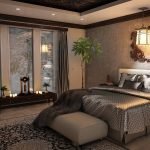
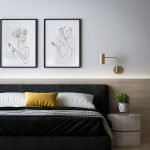
Contemporary modern design represents a purposeful synthesis of form, function, and atmosphere, tailored for today’s homeowners and design professionals who value both aesthetics and practicality. This guide breaks down eight essential elements of contemporary modernism, each illustrated with curated imagery and actionable advice. From material selections to spatial planning and lighting strategies, the focus is on creating spaces that balance visual clarity with everyday usability. Emphasizing natural light, scale, texture, and maintenance considerations, this approach ensures that design decisions are grounded in real-world application rather than abstract ideals.
Material Contrast: Concrete and Warm Wood Fusion
This design highlights the tactile interplay between raw concrete surfaces and warm wood panels, a hallmark of contemporary modern interiors. To achieve this balance, specify matte-finished concrete to avoid a cold, industrial feel, and select wood species such as walnut, cedar, or teak that provide natural warmth and grain variation. Limit wood applications to feature walls, ceiling slats, or cabinetry to maintain a minimalist aesthetic without visual clutter. Concrete surfaces require sealing to prevent staining and moisture damage; choose high-quality sealants and schedule periodic maintenance to preserve appearance and durability.
Sculptural Lighting as Architectural Features
Lighting fixtures in contemporary modern design serve dual roles as functional elements and sculptural focal points. Linear pendant lights or geometric chandeliers with matte black or metallic finishes create rhythm and subtly define spatial zones. When planning lighting, align fixtures to complement natural daylight paths to minimize glare and over-illumination. Consider LED options for energy efficiency and longevity. Note that bespoke lighting often requires professional installation and thoughtful bulb replacement planning due to unique shapes and mounting heights.
Open Plan Flow and Furniture Scale Calibration
Open-plan layouts benefit from furniture scaled to preserve sightlines and facilitate movement. Opt for low-profile sofas, slim tables, and modular seating to maintain spatial openness and flexibility. Ensure walkways are at least 36 inches wide to accommodate comfortable traffic flow. Upholstery in neutral tones with subtle textures anchors the space without overwhelming it. To address increased sound transmission common in open plans, integrate acoustic panels or rugs discreetly into ceilings or floors to absorb noise without disrupting the minimalist aesthetic.
Privacy through Layered Transparency and Screens
Privacy in contemporary modern spaces can be achieved with layered semi-transparent glass panels combined with wood slatted screens. This approach diffuses natural light while controlling sightlines. Use sliding or fixed screen elements with adjustable spacing to adapt privacy levels seasonally or as needed. Combining glass with natural wood enhances thermal performance and softens the overall feel. Regular cleaning is essential to prevent buildup, especially in humid environments, to maintain clarity and aesthetic quality.
Roofline Geometry: Flat Planes with Subtle Angles
Flat or low-slope rooflines with subtle angular planes add visual interest while preserving the minimalist ethos of contemporary modern design. Effective drainage is critical; incorporate hidden internal drains or slight gradients to prevent water pooling. Durable waterproof membranes such as TPO or EPDM rubber provide reliable protection against leaks. While installation costs may be higher than traditional pitched roofs, the clean lines and modern aesthetic justify the investment. Regular seasonal inspections are necessary to maintain roof integrity.
Integrated Planters Enhancing Indoor-Outdoor Connection
Integrated planter boxes along interior perimeters create seamless transitions between indoor spaces and outdoor greenery, reinforcing biophilic design principles. Select low-maintenance, drought-tolerant plants suited to local climate conditions. Incorporate moisture barriers within planter walls to protect structural elements from water damage. Planter maintenance is essential; root growth can impact masonry over time, and irrigation systems must be monitored to prevent waterlogging and ensure plant health.
Minimalist Surfaces: Balancing Texture with Restraint
Minimalist horizontal surfaces employ smooth, neutral-toned materials punctuated by subtle tactile contrasts such as honed quartz, brushed stone, or matte metals. Choose finishes that resist fingerprints and scratches to maintain a clean appearance. Limit decorative objects to preserve surface purity, but introduce texture through textiles like linen or wool to avoid sterility. Matte and textured surfaces may show dust more readily, so establish a regular cleaning routine to uphold their visual impact.
Weather Adaptation in Outdoor Living Areas
Outdoor living spaces benefit from weather-adaptive features such as motorized louvered pergolas that provide adjustable shade and ventilation. Equip louvers with rain sensors for automatic closure to protect furniture and finishes. Use corrosion-resistant materials like powder-coated aluminum to ensure longevity in harsh climates. Mechanical systems require scheduled maintenance to prevent operational failures and extend service life.
Frequently Asked Questions
What defines contemporary modern design compared to traditional modernism?
Contemporary modern design incorporates current materials, technologies, and sustainability practices with a lighter, more restrained aesthetic that often includes organic elements. Traditional modernism adheres more strictly to early 20th-century principles such as industrial materials, flat roofs, and functional minimalism without the same emphasis on warmth or environmental integration.
How can I incorporate warmth into a predominantly concrete interior?
Introduce warmth by integrating natural wood finishes, soft textiles, and layered lighting. These elements counterbalance concrete’s inherent coldness, creating a more inviting and balanced atmosphere.
Are flat roofs practical in all climates for contemporary homes?
Flat roofs are best suited for temperate and dry climates. In regions with heavy rainfall or snow, precise drainage systems and durable waterproof membranes are essential to prevent water damage and structural issues.
Contemporary modern design requires a deliberate choreography of materials, spatial proportions, and technology-driven features to achieve elegant simplicity without compromising function or comfort. From material contrasts to adaptable outdoor elements, this approach prioritizes specificity and thoughtful selection over excess. For homeowners and designers seeking to move beyond fleeting trends, these insights provide a grounded framework for creating spaces that are visually compelling, navigable, and maintainable.
For more room-by-room ideas, explore Architecture Adrenaline’s latest design guides and save your favorite looks for your next project.
Design Deep Dives & Resources
Use these references to deepen your understanding of layouts, materials, lighting, safety, and maintenance decisions critical to contemporary modern design.
Research-Backed Planning Notes
- Outdoor lighting should have a purpose: The U.S. Department of Energy advises layering outdoor lighting with low path lights, focused task lights, and shielded accent lights to optimize aesthetics, security, and energy efficiency. Source: U.S. Department of Energy
- Plant selection impacts maintenance and longevity: The University of Minnesota Extension recommends choosing plants based on sun exposure, soil type, mature size, and maintenance needs to ensure sustainable and attractive landscapes. Source: University of Minnesota Extension
- Landscape design should create connected outdoor rooms: Utah State University Extension suggests using cover, furniture layout, pavers, screens, and planting edges to define outdoor spaces with distinct functions and circulation. Source: Utah State University Extension
On Architecture Adrenaline
- Contemporary Design Meaning: Read the full guide
- Christmas Interior Design: Read the full guide
- How To Install Recessed Lighting: Read the full guide
- How To Install Recessed Lighting In Existing Ceiling: Read the full guide
Authoritative Planning References
- Illuminating Engineering Society Standards - Professional lighting standards covering terminology, visual comfort, glare control, and application-specific practices.
- American Society of Interior Designers - Industry organization focused on design practice, wellness, sustainability, and professional development.
- International Code Council I-Codes - Comprehensive building codes; verify local adoption for compliance.
- DOE Energy Saver Lighting Design - Practical guidance on efficient lighting layers, controls, glare reduction, and fixture placement.
- University of Minnesota Extension Landscape Design - Site condition analysis, plant selection, maintenance, and cost-effective landscape design.
Editor-Selected Amazon Finds
Use these curated shopping starting points to compare dimensions, weather ratings, and customer reviews before purchasing.
Contemporary Modern Design Lighting
Lighting transforms how every finish reads; start here to set the tone.
Contemporary Modern Design Storage
Functional storage solutions keep spaces organized and photogenic.
Contemporary Modern Design Decor
Use restraint and repeat materials already present to maintain cohesion.
Design Deep Dives & Resources
Use these references to go deeper on layouts, materials, lighting, safety, and maintenance decisions that matter for this style.
Research-Backed Planning Notes
- Outdoor lighting should have a job: DOE frames outdoor residential lighting around aesthetics, security, and utility, with controls and shielding to reduce waste and glare. Layer low path lights, focused task lights, and shielded accent lights instead of flooding the entire patio with one harsh fixture. Source: U.S. Department of Energy
- Plant choice affects maintenance and longevity: UMN Extension emphasizes function, maintainability, environmental soundness, cost-effectiveness, and visual appeal in sustainable landscape design. Choose plants around sun, soil, mature size, and maintenance tolerance before choosing containers or furniture colors. Source: University of Minnesota Extension
- A good landscape behaves like connected rooms: USU Extension compares landscapes to outdoor rooms with different uses, volumes, circulation paths, and water needs. Use the cover, furniture layout, pavers, screens, and planting edges to define a room rather than scattering decor around the slab. Source: Utah State University Extension
On Architecture Adrenaline
- Contemporary Design Meaning: Read the full guide
- Christmas Interior Design: Read the full guide
- How To Install Recessed Lighting: Read the full guide
- How To Install Recessed Lighting In Existing Ceiling: Read the full guide
Authoritative Planning References
- Illuminating Engineering Society Standards - Professional lighting reference for terminology, visual comfort, glare, and application-specific lighting practice.
- American Society of Interior Designers - Professional interior design organization for design practice, wellness, sustainability, and industry context.
- International Code Council I-Codes - Use this as a starting point for code families, then verify the code edition adopted by the local building department.
- DOE Energy Saver Lighting Design - Practical guidance for efficient indoor and outdoor lighting layers, controls, glare reduction, and fixture placement.
- University of Minnesota Extension Landscape Design - Extension guidance on site conditions, plant selection, maintenance, function, cost-effectiveness, and visual appeal.
External Inspiration
Editor-Selected Amazon Finds
Use these shopping starting points to compare dimensions, weather ratings, and reviews before buying.
Contemporary Modern Design lighting
Start with lighting because it changes how every finish reads.
Contemporary Modern Design storage
Keeps the space functional instead of just photogenic.
Contemporary Modern Design decor
Use restraint and repeat materials already in the room.