

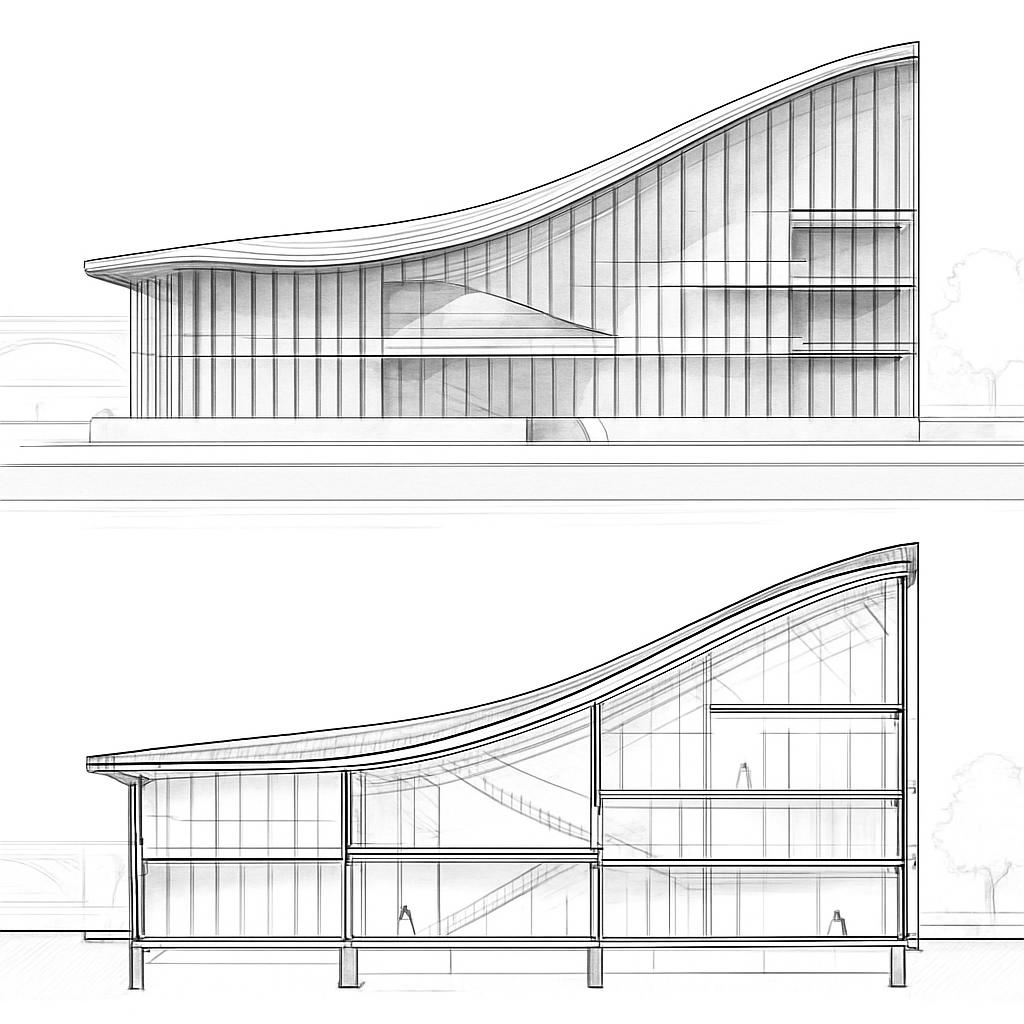
London Toxic Creek Baptistry
Local Anchors and Context
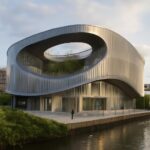
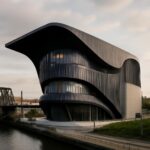
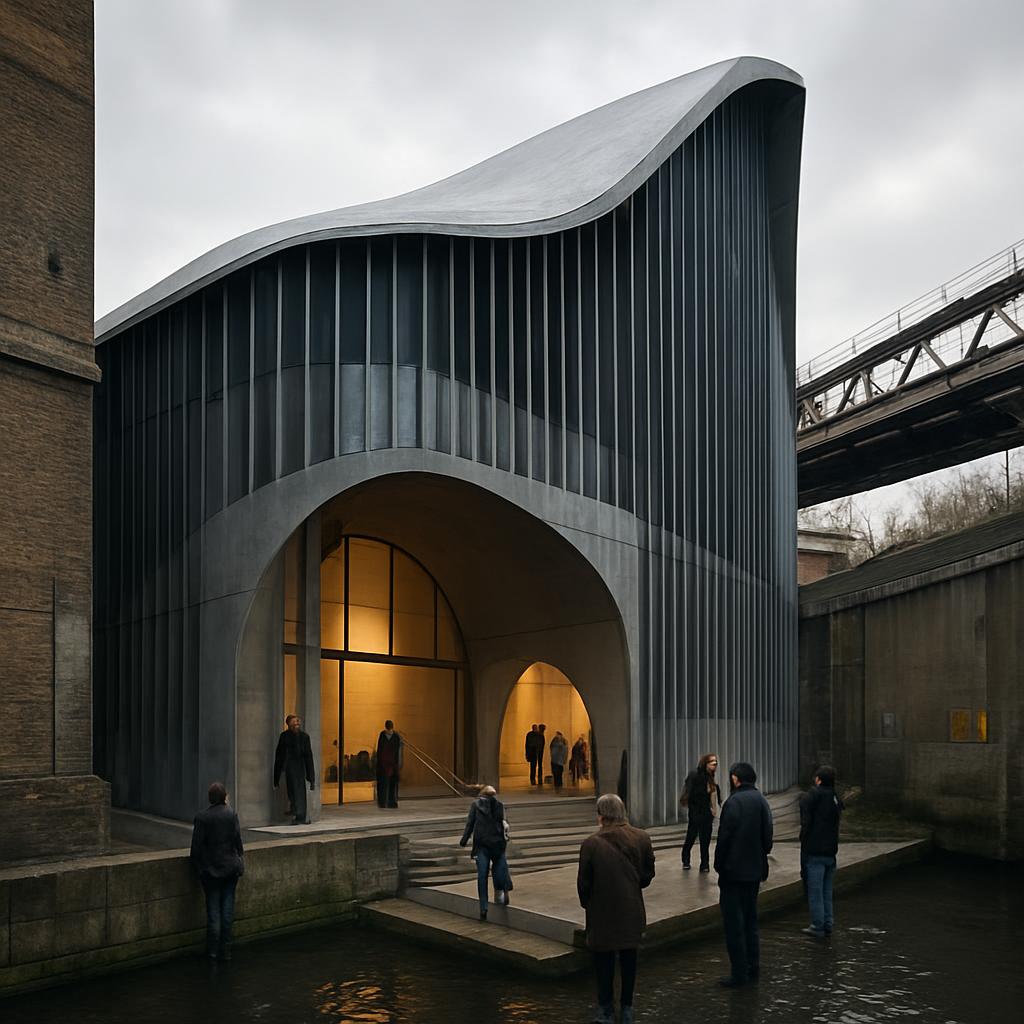
Situated along the curve of the Thames at coordinates 51.5079, -0.0297, the London Toxic Creek Baptistry emerges as an architectural intervention in an area defined by its flood management infrastructure. This mixed-use civic cultural center finds its place amidst the undulating geometry of intersecting road and rail lines, bridges of varied heights, and docks that extend into the water, all contributing to a site rich in industrial history. The location is punctuated by visible retaining walls and vegetation along the river, juxtaposing urban development with the natural elements of the riverbank.
Massing and Materiality
The Baptistry’s form resonates with the Crater Courtyard Ecology Center archetype, presenting a legible structure that harmonizes with the human scale. Its pale concrete megastructure stands juxtaposed against cobalt glass and graphite structural ribs, creating a visual dialogue with the silver membrane panels that cloak the facade. The signature silhouette—a result of its asymmetric flowing roofline and continuous ribbed facade bands—captures attention without succumbing to the trappings of international placelessness. The building's massing and facade rhythm are informed by its site constraints and context, integrating seamlessly with the flood management infrastructure.
Structural and Environmental Integration
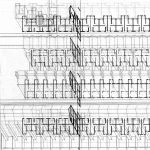
The visible structural system employs a repeatable grid, with ribs and facade bays that underpin the building’s legibility and buildability. A commitment to sustainability is evident through features such as passive shading, daylighting, planted terraces, and low-carbon construction methods. The integration with existing infrastructure underscores a sensitive approach to urban renewal.
Circulation and Programmatic Dynamics
Internally, the Baptistry operates as a civic bathhouse within the confines of a once-industrial machine. This dichotomy of comfort against the backdrop of guilt is expressed through spatial sequences that guide visitors from compressed thresholds into open, unexpected voids. The programmatic layout encourages movement between public and private realms, articulated through a mix of open civic spaces and controlled access zones. This tension is further articulated through the interplay of light, steam, and shadow—inviting visitors to contemplate the relationship between their own comfort and the building’s industrial setting.
Facade Details and Material Palette
| Element | Material | Function |
|---|---|---|
| Facade | Pale Concrete | Structural and Aesthetic |
| Glazing | Cobalt Glass | Light and View |
| Structural Ribs | Graphite | Support and Rhythm |
Aesthetic and Societal Interpretation
The Baptistry stands as a provocative architectural narrative—a sanctuary nested within a flood control system, urging a public discourse on the dualities it embodies: sanctuary versus checkpoint, beauty versus discomfort, and public access versus control. This is an architecture that eschews the comfort of neutrality, posing a tangible question to its interpreters.
Design Question for Readers
How can architecture mediate between the demands of infrastructural pragmatism and the aspirations of public space while maintaining a legible connection to its specific urban context?