

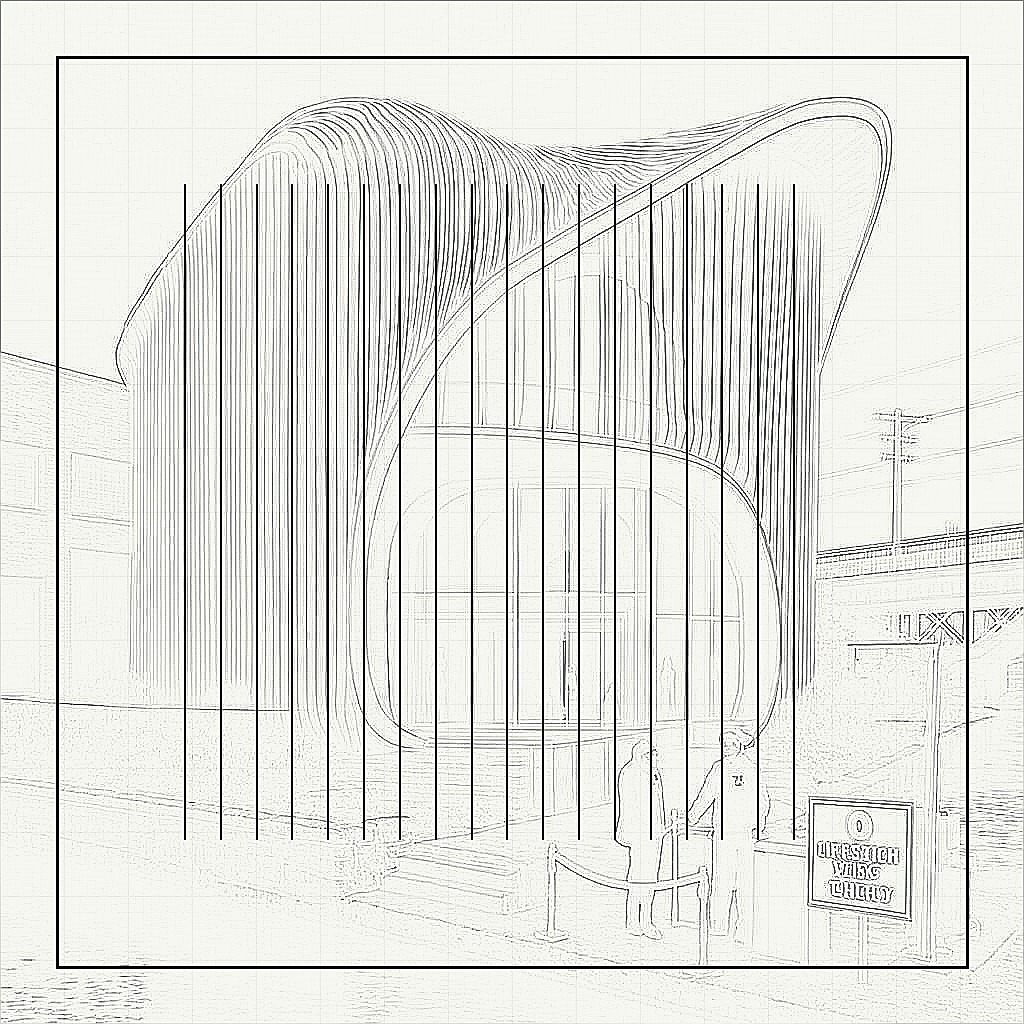


Chicago Public Apology Machine: A Provocative Architectural Enigma
Nestled at the industrial river edge of Chicago, the Chicago Public Apology Machine stands as a contemporary civic and cultural center with a complex narrative. Its location at coordinates 41.8359, -87.6575 places it amidst the remnants of industrial might, a context rich with history yet fraught with environmental challenges. The design takes on the audacious task of addressing these contradictions head-on, resulting in a structure that embodies both the burden of its past and the potential of an uncertain future.
Site and Contextual Tension
The building finds itself in a landscape defined by the scars of industrialization: the freight yards, rail viaducts, and polluted riverbanks of the Chicago River. These elements form the architectural language of the site, and the design smartly integrates visible local anchors such as the bridges crossing the river, retaining walls along the water, and sparse vegetation clinging to the banks. Yet, the project does not shy away from these harsh realities; rather, it embraces them, using them as vital elements in its architectural dialogue.
Massing and Structural Elements
The structure's massing takes inspiration from the notion of a "False-Memory Courthouse," with legible floors and entries that communicate an austere order. However, it is the building's skeletal spine and ribbed civic shell-reminiscent of an alien anatomy-that capture the imagination. The perforated stainless skin acts as a gill-like vent system, which, along with the pale plaster organs and blue surgical glass, lends a disquieting surrealism to the facade.
The structure's form is dictated by the site constraints, with its uneven water edges and intersecting transportation grids. A consistent vertical rib pattern and ribbed facade bands mark the envelope, creating a rhythm that both grounds and elevates the building's identity in the industrial setting.
Circulation and Programmatic Ironies
Inside, the building presents a dichotomy of spaces-an ironic play between public access and control. The circulation paths are intentionally unsettling, guiding visitors through compressed thresholds into unexpected voids. These transitions are both physical and psychological, as visitors are ushered into various civic rituals that seem to veer between public apology and private scrutiny.
The design includes passive shading and planted terraces, features that suggest sustainability while providing unexpected moments of introspection within the harsh grid of the surrounding city. However, it is the juxtaposition of a spa-like public ritual beside visible harsh infrastructures-a dark graphite service rail or a flood-control edge-that raises eyebrows and questions regarding the ethics of luxury amidst environmental decay.
Facade and Material Narrative
The facade serves as both canvas and commentary. Titanium shading fins layer over curved glazing bays, each element contributing to the visual and functional complexity of the project. This intricate shell contrasts starkly against the industrial backdrop, accentuated by high-performance glazing that mirrors the shifting Chicago sky.
A careful choice of materials-perforated stainless steel, pale plaster, blue glass-ensures the building remains a vivid presence, yet one that is rooted in its Midwestern pragmatism. This clash of textures and colors invites both admiration and debate, crafting a narrative of beauty versus discomfort.
Sustainability and Ecological Challenges
The site is not without its challenges. Pollution considerations for water and land use are paramount, and the need for environmental remediation is a persistent constraint. The Apology Machine tackles these head-on, positing itself as a beacon of ecological restoration amidst its industrial past. Through design ingenuity, it highlights the potential for sustainable redevelopment without sacrificing its provocative edge.
The Unsettling Irony of Public Spaces
The Chicago Public Apology Machine is, at its core, an architectural paradox. It is a space where public joy is caught within a municipal paranoia, prompting visitors to question who benefits from such civic endeavors. The irony is palpable: a sanctuary that doubles as a checkpoint, a refuge that whispers of exclusion.
The building's humor lies in its earnestness-it presents luxury wellness rituals beside toxic warnings, creating an architectural joke that is both tender and unsettling. As visitors wander through its spaces, they find themselves participants in a public ritual that is both apologetic and celebratory.
Final Thoughts
In a city marred by industrial pollution and socioeconomic divides, the Chicago Public Apology Machine asks not just for observation, but for engagement. It challenges us to consider: How can architecture serve as both a critique and celebration of its context? How do we reconcile beauty and discomfort in our public spaces?


