Architects similar to Zaha Hadid push the boundaries of space, form, and technology in ways that challenge traditional expectations, blending sculptural rhetoric with urban sensitivity to redefine how we experience buildings.

Several designers stand out for embracing fluid geometry, dynamic massing, and a forward-thinking approach to culture, cities, and users—traits that echo Zaha Hadid’s fearless experimentation. The following profiles highlight how each architect translates Hadid’s ethos into distinct architectural languages.
| Architect | Notable Work | Style Characteristics |
|---|---|---|
| Frank Gehry | Guggenheim Museum Bilbao; Walt Disney Concert Hall | Deconstructivist, sculptural forms, metal-clad surfaces, dynamic movement |
| Rem Koolhaas | Seattle Central Library; CCTV Headquarters | Urban programmatic complexity, bold volumes, experimental geometry |
| Toyo Ito | Sendai Mediatheque; Tod’s Omotesando Building | Experimental latticework, light-filled interiors, translucent skins |
| Daniel Libeskind | Jewish Museum Berlin; One World Trade Center master plan | Angular, fragmented forms, narrative-driven spaces |
| Bjarke Ingels (BIG) | 8house; VIA 57 West | Playful yet practical massing, computational design, human-centered sustainability |
While each designer has a distinct voice, the shared threads with Zaha Hadid include a willingness to experiment beyond conventional geometry, a keen interest in how users interact with space, and a studio culture that embraces computational thinking, parametric design, and bold, expressive forms. These architects have helped redefine what building envelopes, interiors, and public realms can feel like—often blurring the line between sculpture and architecture.
Gehry’s work treats buildings as flowing, kinetic objects. His titanium-clad surfaces and fragmented shifts in form create experiences that feel cinematic and tactile—an essence that mirrors Hadid’s love of dynamic, immersive environments.
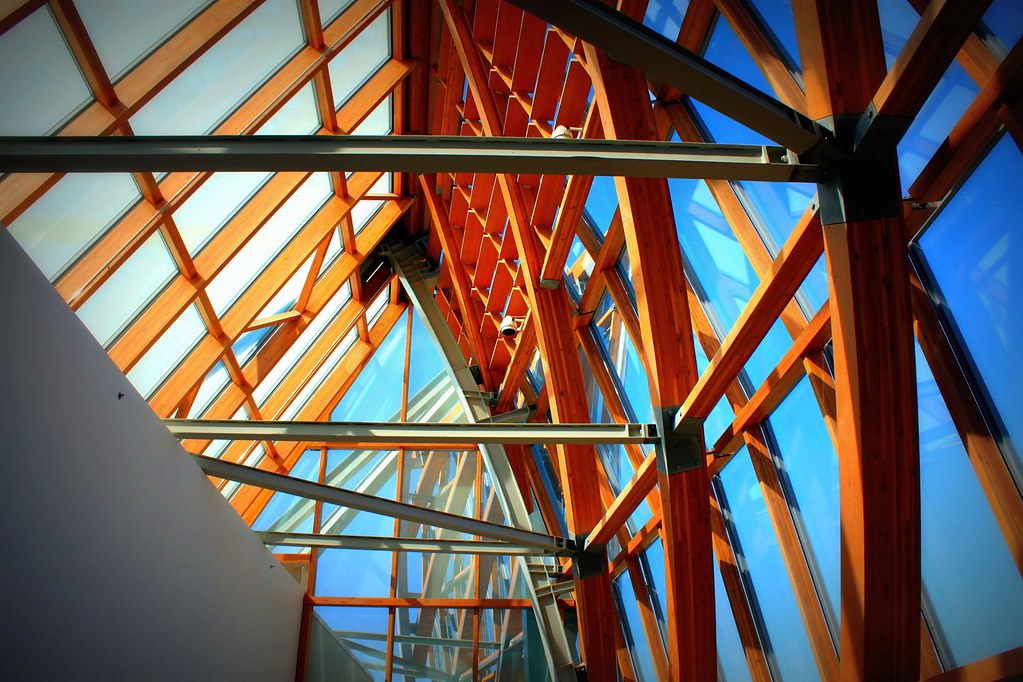
Koolhaas treats buildings as experiments in urban behavior and programmatic flexibility. His designs push beyond aesthetics to explore how architecture orchestrates social and cultural dynamics—an approach that complements Hadid’s explorations of form as a driver of experience.
Ito’s practice emphasizes how structures interact with light, air, and movement, creating spaces that feel almost architectural illusions. His work often uses transparent or perforated skins that modulate light and perception, aligning with Hadid’s interest in experiential architecture.
Libeskind’s architecture often dramatizes history and memory through angular, jagged geometries. This narrative, sculptural quality shares with Hadid’s fearless exploration of space as a narrative medium, even as his formal language diverges into more crystalline or fractured geometries.
BIG often marries sustainable performance with bold, unconventional shapes. The studio’s willingness to experiment with curvature, stacking, and mixed-use strategies mirrors the same impulse that drove Hadid to push architectural boundaries while prioritizing user experience and function.
If you’re exploring architects who share a spirit with Zaha Hadid, consider what you value most: sculptural drama, urban impact, light-filled spaces, or narrative-driven programs. Each of these designers offers a different lens on how architecture can shape experiences, cities, and culture.
Whether you’re studying for a design brief, planning a visit to iconic buildings, or seeking inspiration for a forthcoming project, these architects provide a rich spectrum of approaches that continue Hadid’s legacy of fearless experimentation with form and function. For further exploration, you can check out architecture books on deconstructivist architects that delve into their works and philosophies. Which of these architects resonates with your design sensibility, and why? Share a project or idea in the comments to join the conversation.
For context and deeper reading, you may also explore related discussions on decorative architecture and identity in modern design, including recent scholarship on women’s contributions to American Modernism and how early 20th-century schools fostered groundbreaking careers for women designers.
For readers who want a deeper dive into the broader narratives of modern architecture, the study of pioneering figures and movements adds nuance to how we interpret Hadid’s impact today. The following table summarizes core ideas and exemplar works that align with the Hadid-like spirit discussed above.
Frank Gehry is often considered a pioneer of deconstructivist architecture, using bold, sculptural forms that challenge conventional rectilinear space. His work prioritizes materiality, movement, and a sense of theatricality, which resonates with the bold, boundary-pushing spirit often associated with Zaha Hadid’s practice. Gehry’s designs encourage viewers to experience spaces as dynamic, almost kinetic, rather than static.
Image 1 (caption: Frank Gehry’s Vitra Design Museum demonstrates Gehry’s signature curve-driven forms and material play, located in Weil am Rhein, Germany):

Rem Koolhaas is known for his pragmatic yet radical explorations of urban form and programmatic flexibility. His work often juxtaposes unexpected scales and uses radical, often program-driven design strategies. The Seattle Public Library is a prime example of Koolhaas transforming a library into a civic machine, prioritizing flow, transparency, and modular, adaptable spaces—concepts that align with Hadid’s love for fluid, efficient spaces.
Image 1 (caption: Rem Koolhaas Seattle Public Library, Red Hall area — a study in bold geometry and public space):

Norman Foster’s practice is characterized by high-tech, efficient structural systems, environmental performance, and a strong attention to light, transparency, and urban context. While Hadid’s work is famous for its undulating forms, Foster’s buildings demonstrate a similar drive toward futuristic, forward-looking architecture—spaces that aim to read as optimized machines for living and working within modern cities.
Image 1 (caption: Norman Foster – Carré d’Art, Nimes, 1993, a bold cultural building with crisp geometry):

Jean Nouvel’s architecture thrives on context, material honesty, and a sensitivity to light, color, and the urban fabric. His projects often reveal a poetic interplay between environment and structure, with façades that respond to climate and cultural setting. While not identical to Hadid’s signature curves, Nouvel’s work shares a willingness to push boundaries and reinterpret conventional massing through light, texture, and programmatic intent.
Image 1 (caption: Danish Radio Concert Hall by Jean Nouvel — a study in brick, glass, and daylight):

Santiago Calatrava brings a sculptor’s precision to engineering, with buildings that read as both architecture and biomechanical sculpture. His structures emphasize movement, graceful lines, and a sense of kinetic architecture, reminiscent of Hadid’s fluid sensibilities though rooted in structural grids and dynamic forms. Calatrava’s work often doubles as public landmarks and travel corridors, blending function with expressive form.
Image 1 (caption: Calatrava’s signature white, streamlined forms often inspired by natural movement):

Tadao Ando is celebrated for minimalist, concrete-based architecture that relies on light, space, and poetry rather than ornament. His work highlights monolithic forms, precise materiality, and contemplative spaces that transform everyday experiences. Ando’s emphasis on simplicity and material honesty offers a complementary counterpoint to Hadid’s exuberant forms, while still speaking to a shared modernist vocabulary of clarity and spatial artistry.
Image 1 (caption: Row House in Sumiyoshi by Tadao Ando — a study in restrained materiality and light):

Herzog & de Meuron are known for their material experimentation, tactile façades, and sensitivity to context. Their work often blends tradition with cutting-edge technique, turning ordinary materials into sculptural forms and creating architectures that invite prolonged civic engagement. The duo’s projects demonstrate how craft, climate, and culture can converge into evocative, durable spaces—an approach echoing Hadid’s willingness to redefine architectural grammar through innovation and context.
Image 1 (caption: Vitra House by Herzog & de Meuron — a refined expression of concrete and glass):

Kazuyo Sejima, a partner of SANAA, is celebrated for light, transparency, and gentle, refined forms. Her work emphasizes simplicity, openness, and a quiet, almost ethereal atmosphere that invites public interaction. While stylistically distinct from Hadid’s sometimes aggressively sculptural forms, Sejima’s approach shares an interest in luminous interiors, seamless transitions, and context-aware minimalism.
Image 1 (caption: Kazuyo Sejima — a portrait image showing her signature pared-down aesthetic):

Daniel Libeskind’s architecture embraces monumentality, memory, and complex angular geometries. His work often engages with urban narratives and symbolic meaning, producing spaces with a strong sense of identity and history. The sharp angles and clear lines in Libeskind’s designs echo Hadid’s interest in pushing spatial perception, albeit through a different architectural grammar that emphasizes memory and context as design drivers.
Image 1 (caption: WTC Design Competition imagery — Libeskind’s angular language and urban imagination):

Bjarke Ingels and his firm BIG are known for playful, sustainable, and socially ambitious architecture. Their work embraces a pragmatic optimism, using curvilinear forms and function-driven design to solve real-world problems. While Hadid’s work is renowned for its fluidity, BIG’s projects reveal a similar interest in rethinking conventional program through adaptable, mass-customized geometries that respond to context, climate, and community needs.
Image 1 (caption: BIG, bjarke ingels group, Søfartsmuseet / Danish Maritime Museum — a modernist yet playful maritime archive):

As we wrap up our exploration of architects who echo the groundbreaking vision of Zaha Hadid, it’s clear that the world of architecture is bursting with talent that challenges norms and pushes boundaries. From the fluid forms of Bjarke Ingels to the innovative designs of UNStudio, each of these architects brings a unique flair that continues Zaha's legacy of inspiring wonder and creativity. By embracing their work, we open ourselves up to a fresh perspective on architecture and its possibility to shape our environments into extraordinary experiences.
If you’ve enjoyed discovering these visionary architects, why not keep the inspiration flowing? There’s so much more to explore, and by following us on social media, you’ll stay updated on the latest architectural trends and innovations. Check out our Instagram page for daily doses of design inspiration and to join a community that shares your passion for stunning architecture! Let’s keep the conversation going and continue to celebrate the magic of design together.


