
Most people find the fresh-paint smell drops enough to be comfortable within 24-72 hours; the exact duration depends on paint chemistry, airflow, and room conditions. This article lists typical timeframes, explains why paints continue to off-gas, and gives focused, actionable steps to reduce odor and VOC exposure quickly and safely.
What Creates the Paint Smell
The odor originates from volatile organic compounds, solvents, and additives that evaporate while the coating dries and cures. For a concise definition of VOCs and why they continue to off-gas after application, see Volatile Organic Compounds' Impact on Indoor Air Quality.
Realistic Timeframes to Expect
With good ventilation, the most noticeable smell typically falls within 24-72 hours. Low-VOC latex paints can continue low-level off-gassing for days to a few weeks; oil-based or high-solvent coatings can emit detectable odors for weeks to months in stagnant air. The EPA summarizes expected timelines and ventilation effects in Addressing Indoor Environmental Concerns During Remodeling, noting that odors usually diminish over days to weeks but can persist in poorly ventilated spaces.
Key Factors That Change Duration
- Paint type: solvent-rich alkyds and oil-based finishes release more VOCs and cure more slowly.
- Ventilation: measured as air changes per hour. Increasing air changes clears VOCs far faster than relying on diffusion alone.
- Temperature and humidity: higher temperatures and lower humidity speed evaporation but may also increase peak odor.
- Surface area and coats: more coats or highly textured surfaces multiply total emissions proportionally.
- Primers and sealers: they can reduce later emissions from substrates but contribute their own emissions until cured.
How to Ventilate Effectively
Create cross-ventilation and force air out with window or box fans; aim to run continuous exhaust for at least 48-72 hours after the final coat. The EPA remodeling guidance outlines practical ventilation steps and recommends continuing ventilation during curing to lower occupant exposure and shorten odor duration Addressing Indoor Environmental Concerns During Remodeling.
For room-level strategies when painting cabinets or kitchens, Architecture Adrenaline’s guide on How To Paint Kitchen Cabinets describes opening doors and drawers, staging painted components outdoors or in a ventilated garage, and sequencing work to minimize occupied-house exposure.
Filtration and Odor Removal Options
An air purifier with an activated-carbon stage reduces gaseous VOCs and odors faster than HEPA-only units. Choose a unit sized for the room and run it continuously; Architecture Adrenaline’s Best Air Purifier for VOCs compares models and explains why carbon bed capacity matters more than nominal CADR for odors.
When an Odor-Blocking Primer Helps
Use odor-blocking or stain-sealing primers when substrates emit strong tobacco, smoke, or pet odors. Shellac-based primers are effective at trapping surface-bound contaminants, but they carry solvents and require the same ventilation precautions as topcoats. For a stepwise remediation workflow, identify moisture or contamination, clean, spot-prime, and retest, see Architecture Adrenaline’s Will Sour Paint Smell Go Away? Tips to Speed Up the Process.

Room-Specific Expectations
- Bedrooms and living areas: with cross-ventilation and fans, smell is usually tolerable in 1-3 days.
- Small closets and bathrooms: expect longer persistence unless you run mechanical exhaust or leave the door open to a ventilated space.
- Basements and garages: cooler, stagnant air slows dissipation; use an exhaust fan and dehumidifier to increase air exchanges.
- Cabinets and furniture: allow cabinets and furniture additional curing time, preferably in a ventilated area, and run a purifier in the room for several extra days.
| Factor | Typical Timeframe |
|---|---|
| Strongest perceptible odor | 24-72 hours with good ventilation |
| Low-VOC latex residual off-gassing | Days to several weeks |
| Oil-based or solvent-rich coatings | Weeks to months in poor airflow |
Practical Steps to Reduce Smell Fast
- Ventilate continuously. Run windows, cross-breezes, and exhaust fans day and night for the first 48-72 hours after the final coat.
- Run a carbon-stage air purifier sized to the room continuously for at least 48-72 hours; longer if odors persist.
- Stage cabinets and furniture outside the occupied room while they cure; open doors and drawers to speed internal drying.
- Avoid adding scented candles or aerosol sprays during curing; they introduce extra VOCs and can confuse symptom sources.
- Consider a low-VOC or zero-VOC topcoat to reduce long-term emissions; Architecture Adrenaline’s Low VOC Paint Choices for a Healthier, Eco-Friendly Home summarizes product categories and tradeoffs.
Health and Safety Considerations
Short-term exposures can cause headache, dizziness, throat or eye irritation, and nausea in susceptible people. Minimize exposure for infants, pregnant people, older adults, and those with respiratory illness by scheduling painting when they can avoid the space and by maximizing ventilation during and after the job. For resident- and painter-focused safety practices and timelines for odor dissipation, consult the EPA’s Healthy Indoor Painting Practices Safety Guide for Residents, Property Managers, Painters and the consumer-facing Paint Fact Sheet.
Common Myths and Better Choices
- Onions and similar home remedies may mask or absorb some odors temporarily but do not remove VOCs from the air.
- Scented products add volatile compounds and can worsen indoor air quality; they do not speed curing or remove paint emissions.
- Source control is the most effective long-term choice: select low- or zero-VOC products where practical and plan ventilation and filtration into the project schedule.
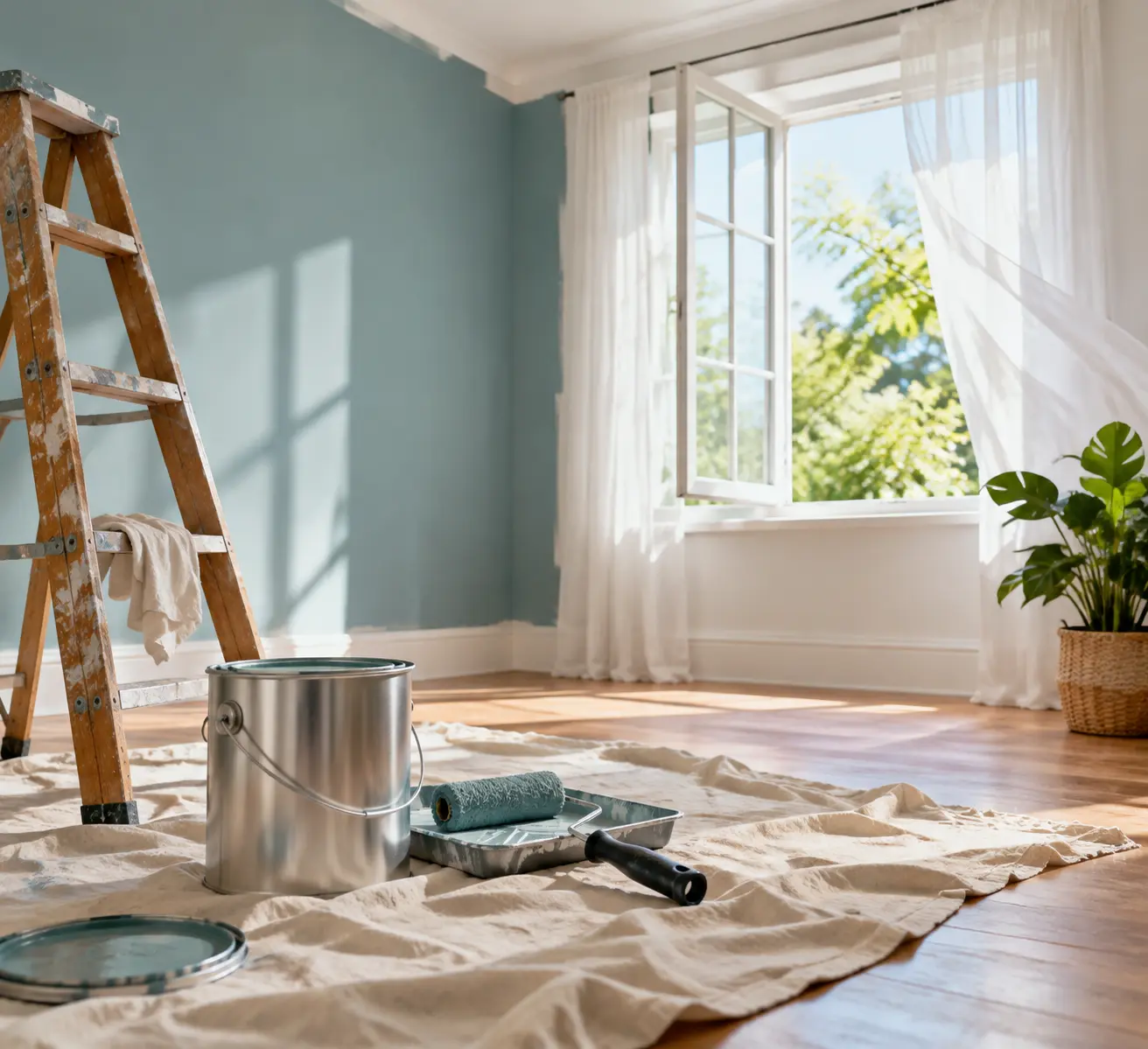
Checklist Before Reoccupying Painted Rooms
- Ventilate and operate fans for at least 48-72 hours after the final coat, longer for solvent-based systems.
- Run an activated-carbon air purifier continuously for several days if occupants are sensitive.
- Keep painted-room doors closed until odors have meaningfully decreased to limit VOC migration.
- Allow cabinets and furniture extra curing time outdoors or in a ventilated area before full reuse.
Consistent ventilation plus carbon-stage filtration reduces both perceived odor and airborne VOC mass most effectively; if odors remain after following these steps, prioritized actions are to increase air changes and replace the purifier’s carbon media. For project-specific product recommendations and selection guidance, see Architecture Adrenaline’s Best Air Purifier for VOCs and the primer-and-odor workflow in Will Sour Paint Smell Go Away? Tips to Speed Up the Process.
Related Video
Understanding how long the smell of paint lingers can help you plan your projects efficiently. The timeframe varies based on factors such as ventilation, humidity, and the type of paint used. Generally, allowing adequate air circulation can significantly reduce the odor's presence. Most users find that after a few days, the smell diminishes considerably, though for some, it may take longer.
More from Architecture Adrenaline
If you need more tips and tricks related to home projects, check out our social media channels for additional insights. You can find us on Instagram at Architecture Adrenaline.