
Urban Greenhouse Cultural Center: Engaging with Paris' Urban Fabric
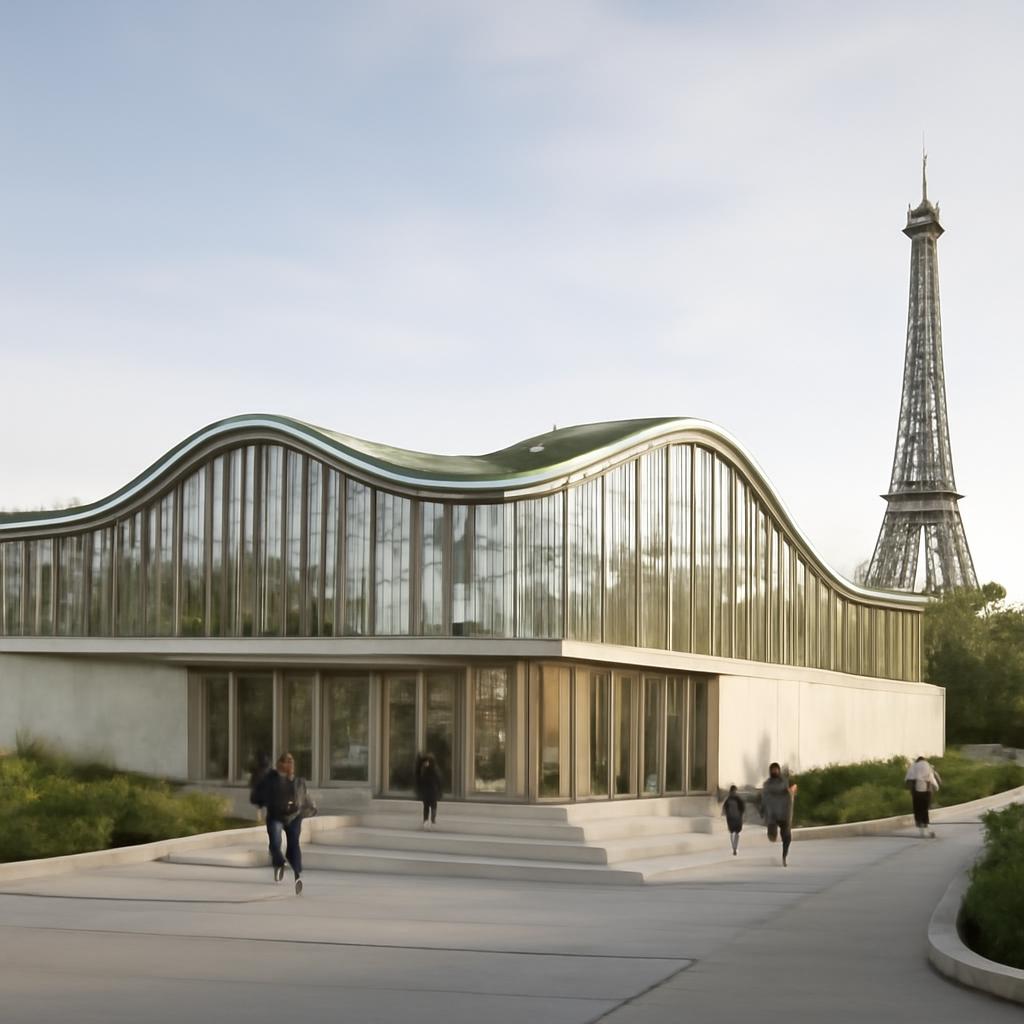
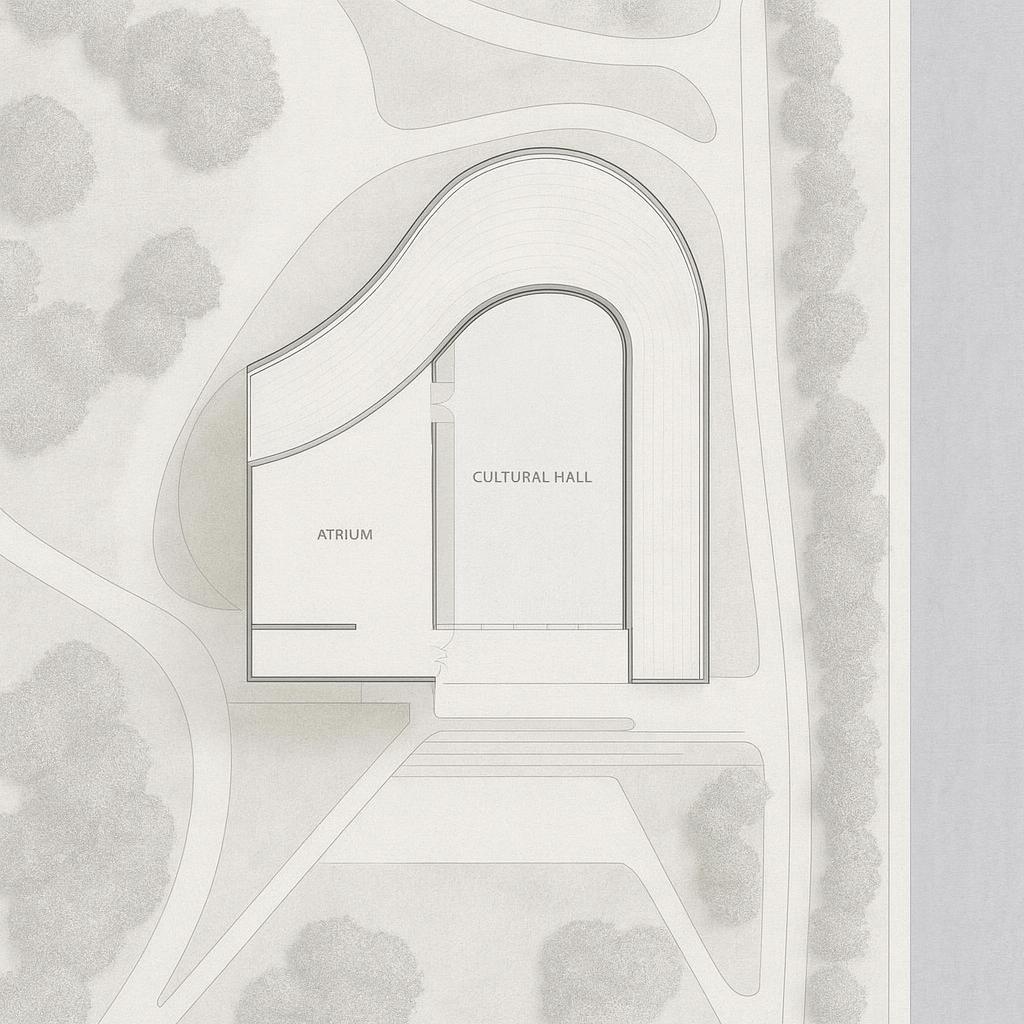
Located on the edge of an undeveloped landmark site near the Eiffel Tower, the Urban Greenhouse Cultural Center positions itself as both an architectural experiment and a community asset. The site, currently underutilized, benefits from the juxtaposition of historical context and modern ecological design embodied by this project.
Massing and Structure
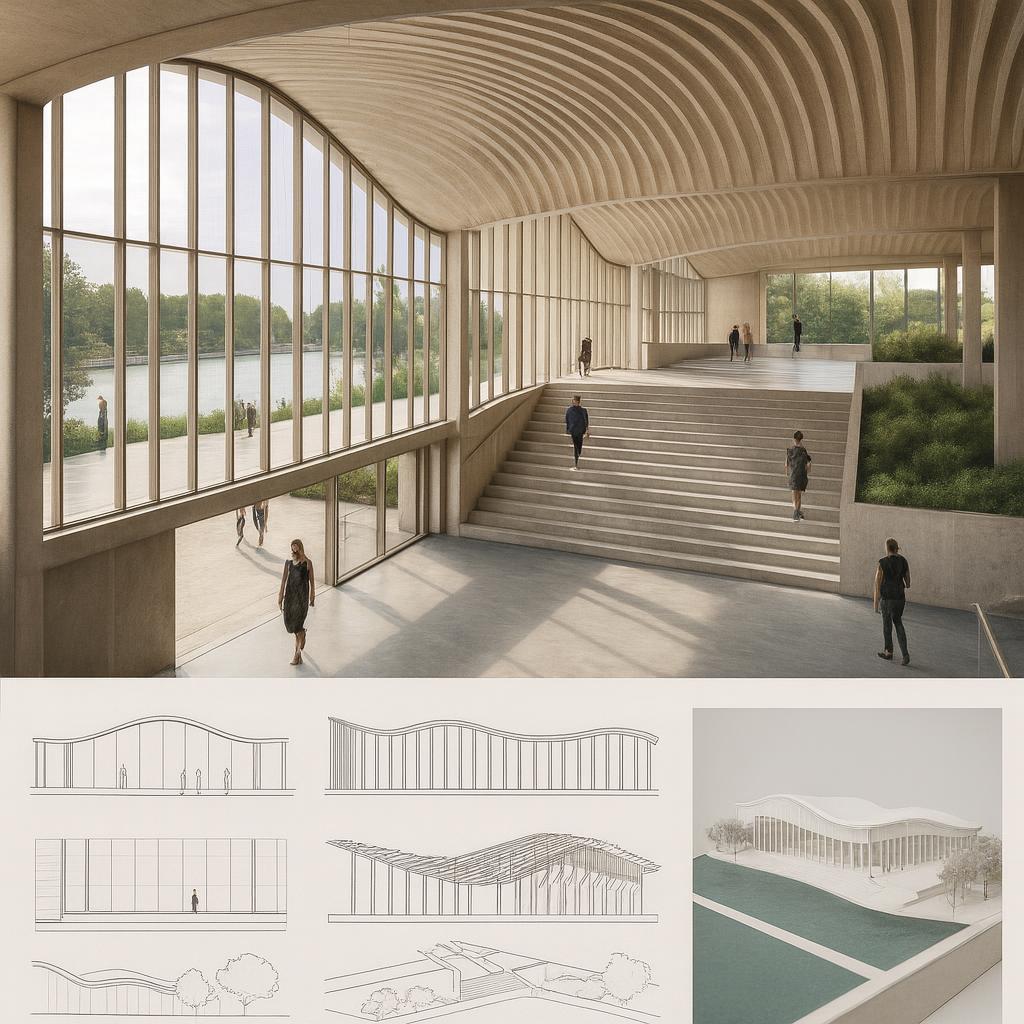
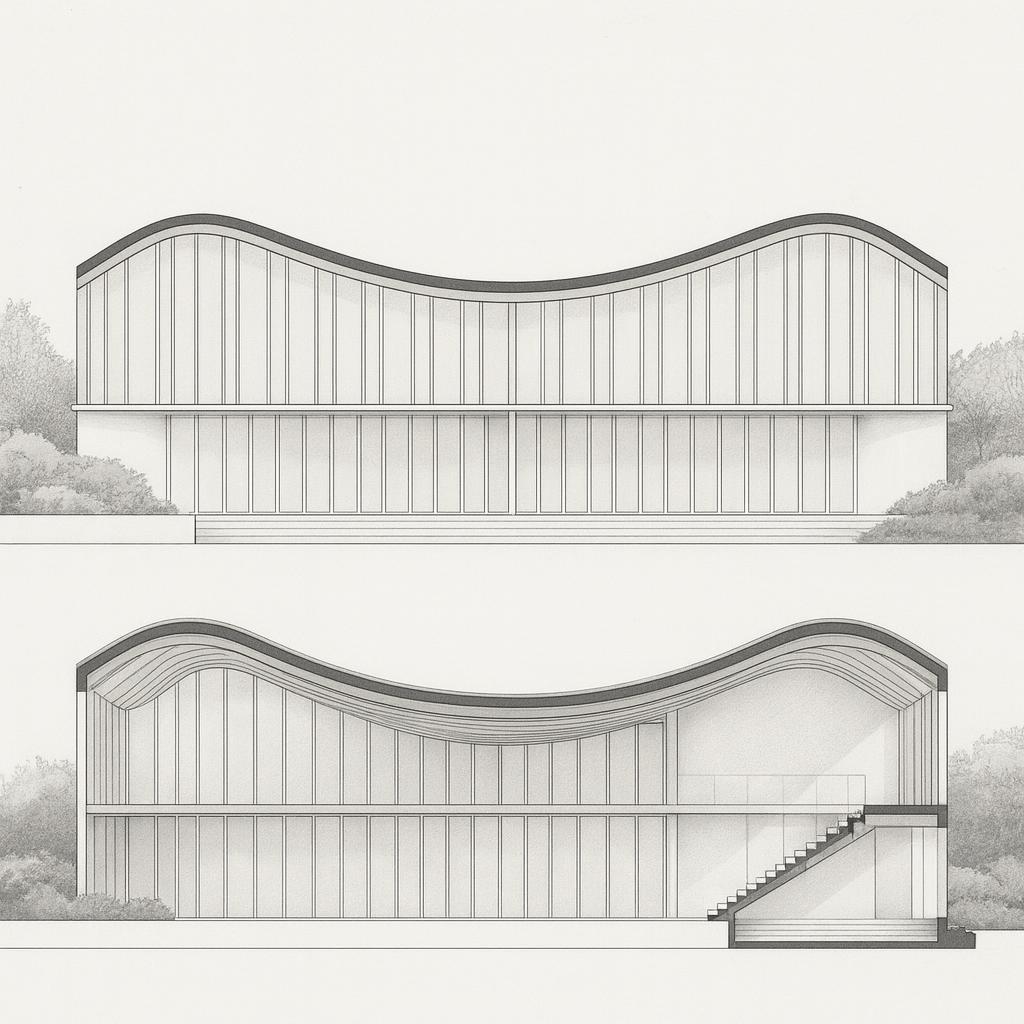
The center's massing is articulated through two intersecting volumes: a lower cultural hall and a taller greenhouse space above. This dual-volume design offers a balance between solid and transparent, a clear reflection of the site's environmental and social aims. The choice of white board-formed concrete for the base provides a tactile contrast to the airy greenhouse space, rendering a visual equilibrium between solidity and lightness.
The structural logic of the building is grounded in a steel or reinforced concrete frame, adequately supporting the undulating roof and extensive glazing. This framework not only accommodates the building’s architectural ambition but also meets the pragmatic requirements of buildability and sustainability.
Facade and Envelope
The facade is a study in rhythm and transparency. Clear low-iron glass walls are framed by vertical blue-gray metal fins, adding depth and dynamic reflections that change with the daylight. This composition yields a repeatable facade pattern, offering both shade and visual interest. The material palette—a civic stone theme of warm white concrete, deep green landscape, and brushed aluminum—complements the surrounding environment while fostering an engaging public space.
Circulation and Entry
A generous plaza marks the entrance, transitioning seamlessly from the urban street to the building’s interior. The sloped entrance serves as an inviting gesture, integrating fluidly with the public pedestrian paths that lace through the site, thereby enhancing accessibility and engagement.
Sustainability and Landscape
The project extends its civic duty through sustainable initiatives such as a green roof with native planting. These features not only improve biodiversity but also function as passive ventilation systems and rainwater harvesting platforms. The landscape design integrates pathways and greenery, providing a seamless transition between the urban context and this green oasis.
Design Table
| Element | Material | Function |
|---|---|---|
| Facade | Low-iron glass, blue-gray metal fins | Transparency, shading, visual rhythm |
| Structure | Steel or reinforced concrete | Support for roof and glazing |
| Roof | Green roof | Ecological integration, aesthetics |
Conclusion
The Urban Greenhouse Cultural Center stands as a modern intervention in the fabric of Paris, harmonizing ecology with urban life. Its layered design encourages a dialogue between nature and culture, embedded within its carefully curated material palette and structured framework.
Given the project's ambition to balance sustainability with civic function, does the design adequately address the densely layered historical and urban context of Paris, or are there further opportunities for engagement?