Chicago False-Memory Courthouse: A Dialogue with Industrial Heritage
Nestled within the gritty fabric of Chicago's freight warehouse and rail-yard landscape, the Chicago False-Memory Courthouse presents an audacious juxtaposition of past and future. This mixed-use civic cultural center challenges traditional notions of a courthouse by integrating elements that provoke both curiosity and discomfort.
Massing and Silhouette
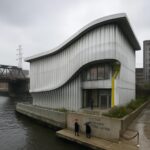
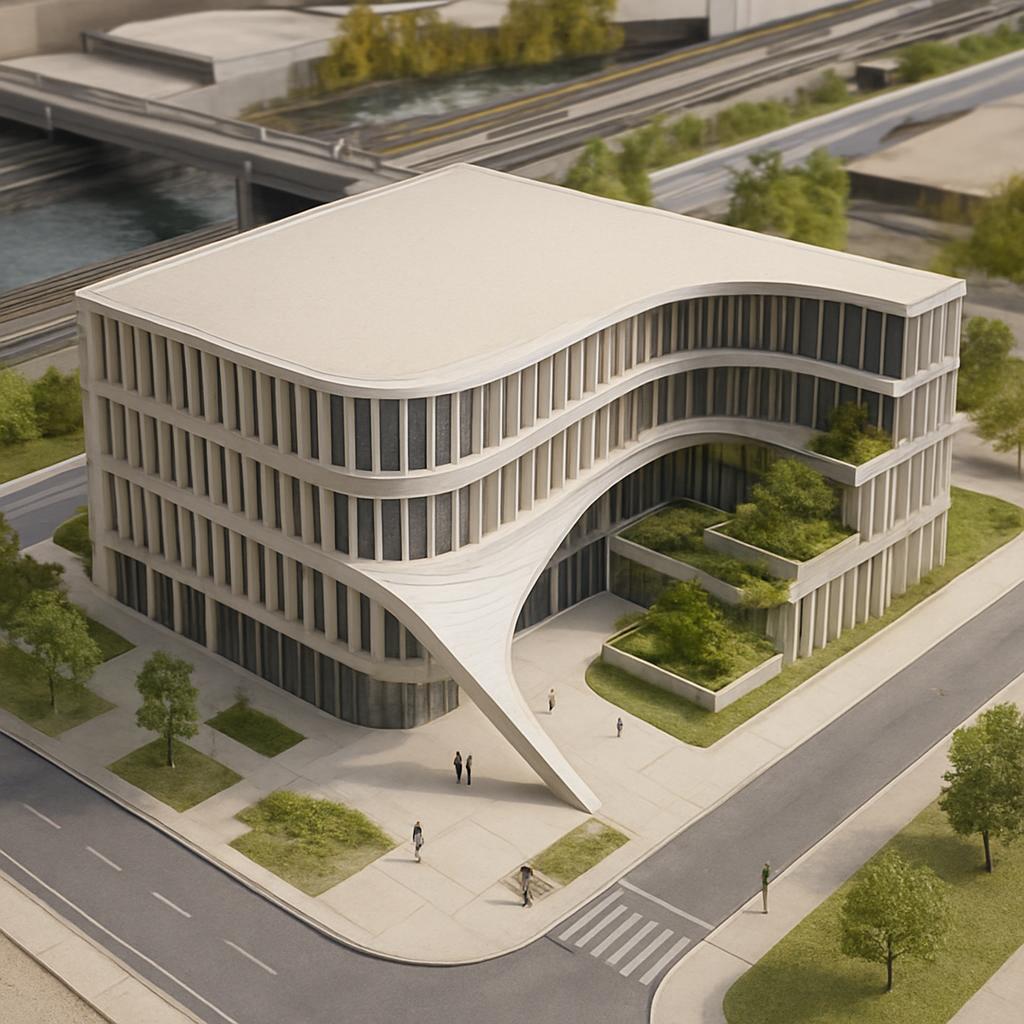
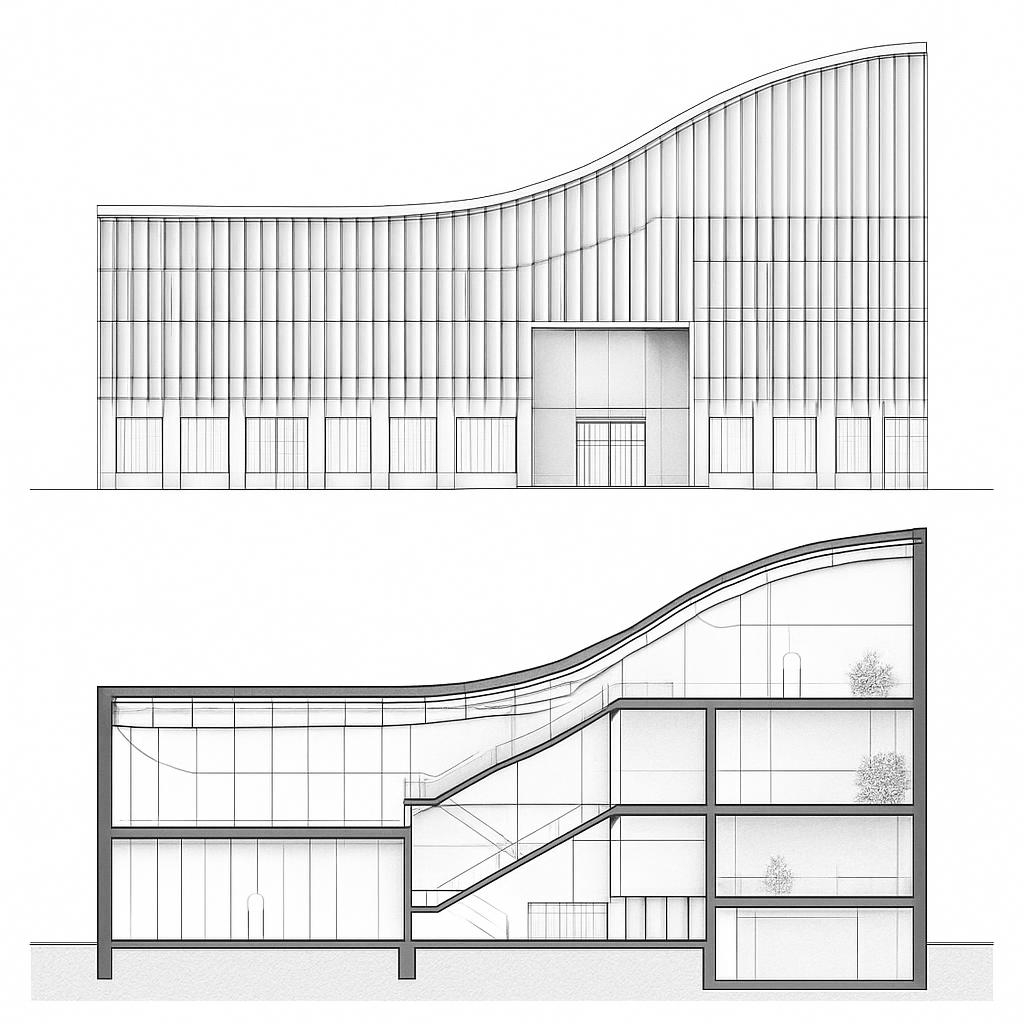
The building's form is an undulating mass of pale plaster organs and perforated stainless skin. Its signature silhouette is defined by a sweeping, asymmetric roofline that flows dynamically over continuous ribbed facade bands. The structure seems to perch on the site like a mechanical organism clinging to the industrial heritage of the area. This roofline serves as a metaphorical reminder of a city constantly in motion yet anchored in its past.
Facade and Materiality
A defining feature of the courthouse is its facade, which combines perforated stainless skin with blue surgical glass and dark graphite service rails. This palette of materials offers a stark, industrial aesthetic that resonates with the site's historical context. The facade's continuous vertical ribs create a rhythmic pattern, complemented by curved glazing bays and layered titanium shading fins. High-performance glazing and shaded terraces subtly hint at sustainable intentions while maintaining the building's raw visual impact.
Local Anchors and Context
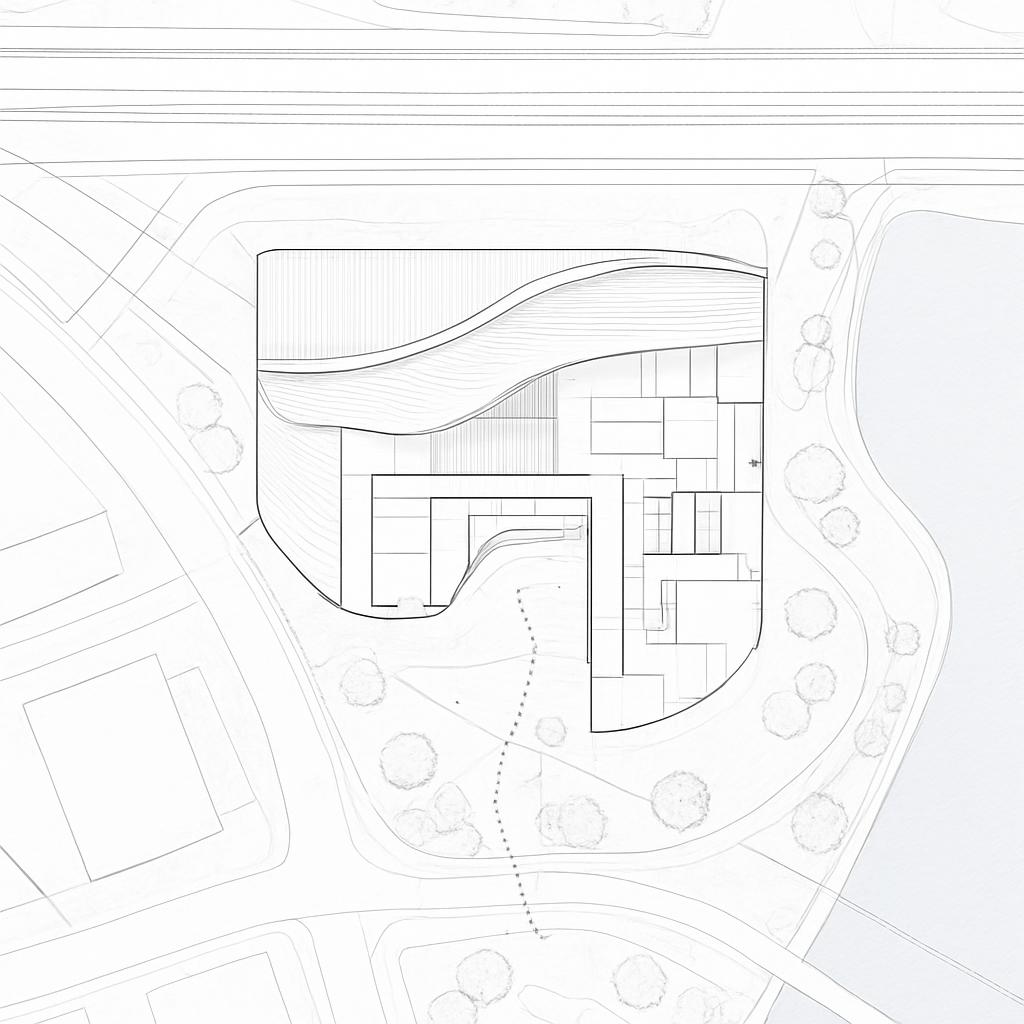
The project's design is deeply anchored in its specific locale. Visible elements such as rail bridges, limestone industrial remnants, and steel sheet piling not only delineate the site's historical narrative but also ground this contemporary insertion in the city's urban tapestry. The nearby Chicago River edge and Goose Island add to the dialogic tension between the city's natural and constructed environments.
Circulation and Interior Experience
The interior of the courthouse continues the theme of layered contradictions. Visitors enter through recessed glass doors framed by the building's flowing curves, leading into a generous atrium filled with daylight. Inside, structural ribs and columns mirror the exterior's rhythm, supporting a network of stairs, ramps, and bridges that guide public movement through the space. This interior landscape fosters a sense of ritual, where various civic activities unfold amidst an atmosphere of control and comfort.
Irony and Dichotomy
The courthouse plays with irony by showcasing luxuriously detailed public spaces next to visibly harsh industrial infrastructure. The juxtaposition of a velvet-rope wellness ritual with the stark backdrop of a freight yard blurs the line between sanctuary and checkpoint. This tension invites both engagement and critique, emphasizing the building's role as a playground at the edge of control.
Sustainability Considerations
Despite its seemingly industrial demeanor, the courthouse incorporates sustainable strategies such as passive shading, planted terraces, and low-carbon construction techniques. These aspects acknowledge the pressing concerns of climate change while remaining true to the building's industrial narrative.
A Thought-Provoking Architectural Inquiry
As we reflect on the Chicago False-Memory Courthouse, we must ask: How does this building's architectural language challenge our perceptions of civic space, and to what extent does it successfully navigate the tension between public access and institutional control?