
A small brown bug on the sheets is usually a beetle or carpet pest, not a bed bug; confirming identity with a few visual checks and a preserved sample avoids unnecessary treatments and wasted expense.
Why Misidentifications Matter
Confusing a beetle for a bed bug triggers costly pest treatments and missed underlying problems such as textile damage or stored-food infestations. Misidentification also delays the correct remediation: carpet beetle larvae require laundering and storage changes, while true bed bug infestations often need integrated heat, encasements, or professional chemical treatments.
Clear Visual and Behavioral Checkpoints
Examine the specimen under good light or a magnifier and use these diagnostic cues.
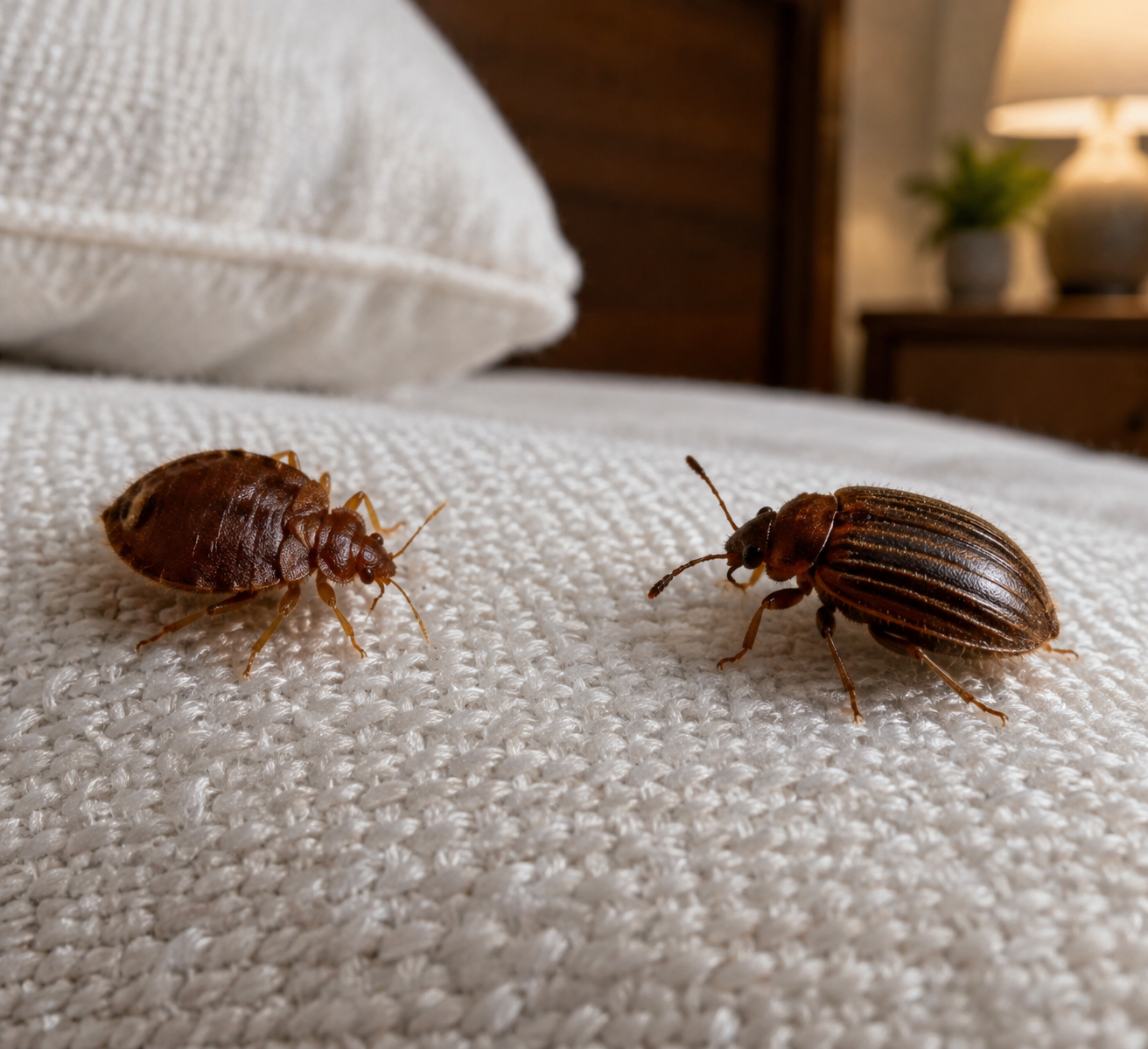
- Body shape. Flattened, oval adults 4-7 mm long indicate bed bugs; rounder, domed bodies point to many beetles.
- Back seam. A visible, hardened wing-cover seam (elytra) down the back identifies a beetle; bed bugs lack elytra.
- Surface texture. Scales or dense setae are common on carpet beetles and their larvae; bed bugs have a smooth, leatherlike cuticle.
- Legs and movement. Long, spidery legs and quick, erratic hops suggest spider beetles; slow walking and a tendency to hide in seams favors bed bugs.
- Associated evidence. Fabric holes, mothlike larvae, or stored-food webbing point to stored-product pests; tiny clustered dark fecal spots, eggs about 1 mm long, or bloodlike stains point to bed bugs.
Most Common Beetles That Resemble Bed Bugs
These taxa appear most often in household misidentifications and require different responses.
| Species | Diagnostic note |
|---|---|
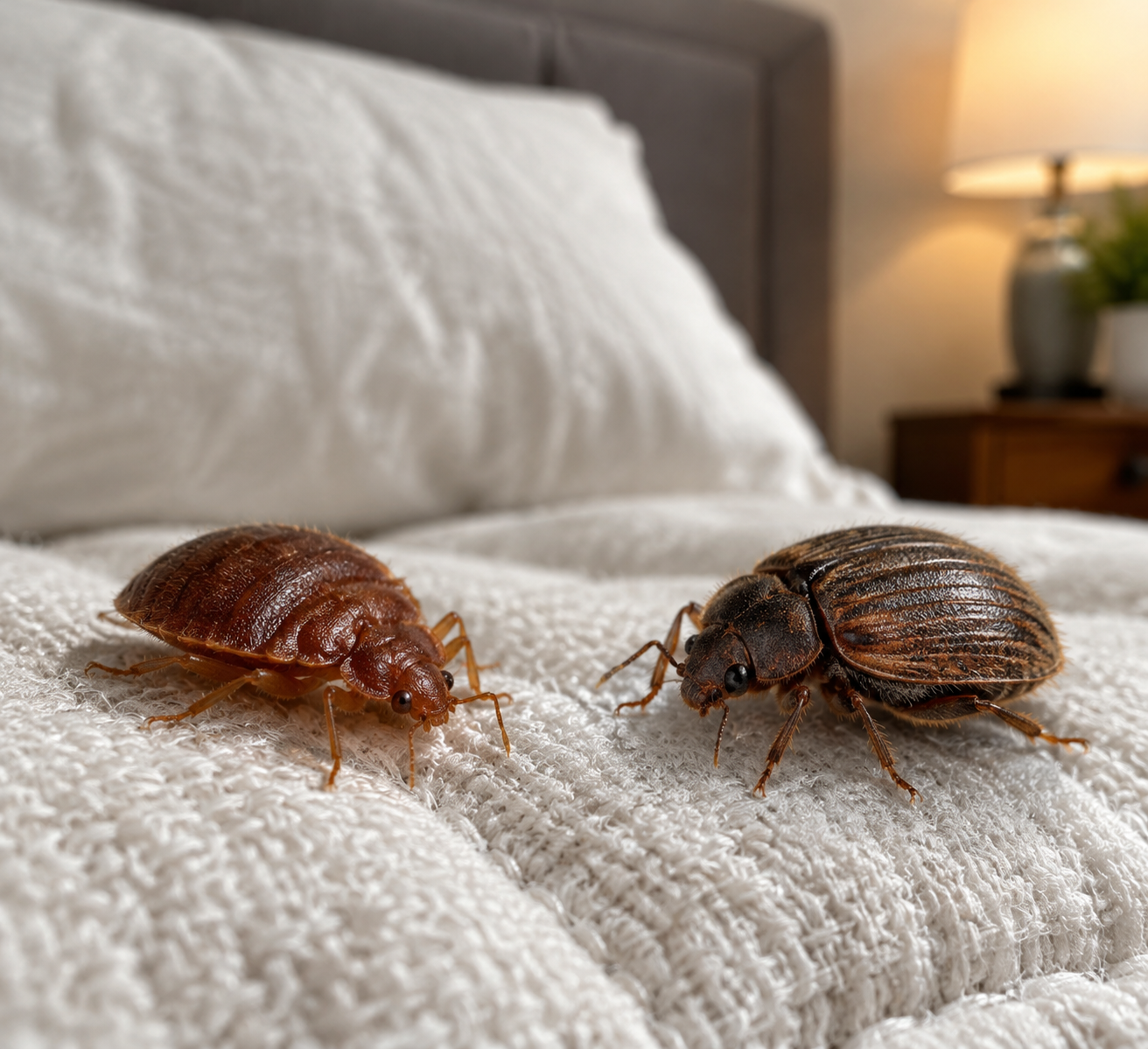
| Carpet beetle (adults and larvae) | Adults 1.5-4 mm with mottled scales; larvae are bristly and chew fabrics. See removal and prevention steps in the carpet-beetle guidance. |
| Spider beetle | Rounded body, long legs, head partly hidden under the thorax; often near dry foods, cardboard, or attic access points. |
| Bat bug and swallow bug | Nearly identical in size and profile to bed bugs but associated with bats or birds. Host association and a specialist examination separate them from human-bed-feeding bed bugs; see the CSU Extension guidance on look-alikes. |
| True bed bug (reference) | Flat when unfed, becomes reddish and bloated after feeding; leaves clustered fecal spots and eggs in mattress seams and crevices. |
Where to Inspect in a Bedroom
Location narrows the likely pest quickly. Check mattress seams, piping, headboard joints, and box-spring edges for the clustered signs of bed bugs. Inspect closets, baseboards, under radiators, vents, and stored boxes for carpet or spider beetles. If insects show up on bedding but mattress seams are clean of eggs and fecal spots, suspect a beetle or transient pantry pest rather than an active bed bug colony.
How to Preserve Evidence for Identification
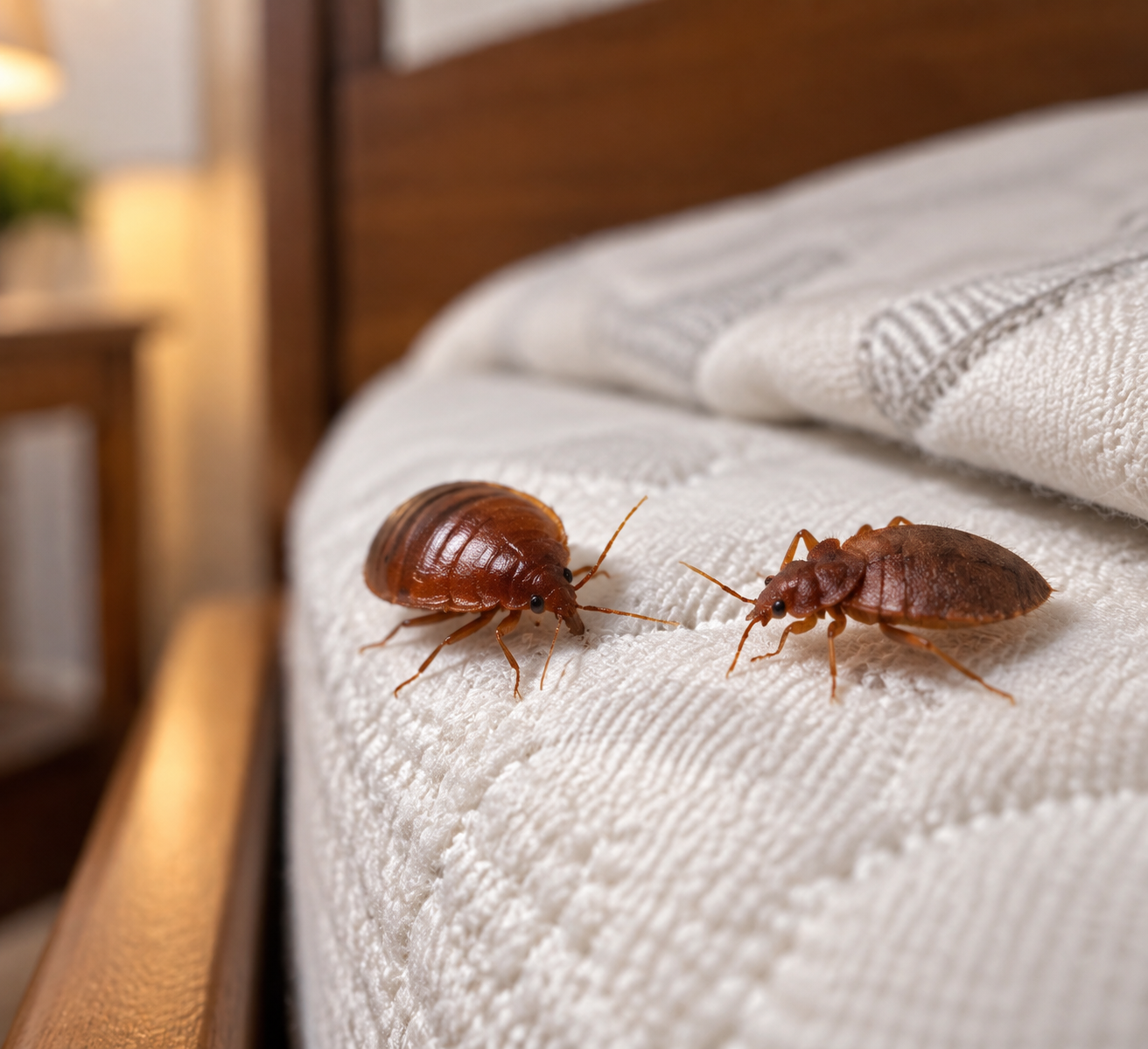
Handle specimens to preserve scales, hairs, and body shape for a technician or extension diagnostician.
- Collect the insect on clear tape, or place it in a small rigid container with paper to prevent crushing. Label where and when it was found.
- Photograph dorsal and lateral views with a macro-capable phone or a 10x hand lens held near a neutral background.
- Gather contextual photos showing fecal spots, stains, fabric damage, or nearby animal nests, these often identify the species faster than a single specimen.
- If fabric damage is present, bag affected textiles separately and launder on the highest safe temperature for the fabric to kill larvae and remove scales.
Definitive Signs That Indicate Bed Bugs
Certain signs reliably point to Cimex lectularius and merit prompt action. Look for clustered dark fecal spots on seams and mattress folds, tiny white eggs and translucent eggshells about 1 mm in length, rusty or reddish stains from crushed bugs, and live adults or nymphs concealed in cracks, electrical outlets, or furniture joints. The EPA and university extension services recommend confirming these signs before applying structural treatments; consult extension resources for diagnostics and life-cycle details.
When to Seek Professional Identification and What to Provide
Call a pest-control firm or an extension diagnostic lab when you find multiple live insects, recurrent bites, or ambiguous specimens you cannot identify. Provide a contained sample, high-resolution photos, the exact discovery location, and notes on associated signs such as fecal spotting, fabric holes, or nearby animal hosts. Cornell Integrated Pest Management maintains clearly illustrated identification guidance and recommends sending specimens to an extension lab when necessary; for professional training resources, the Cornell PMEP course outlines standard identification and inspection protocols.
Related Site Resources
For practical, site-specific advice on pests that commonly get confused with bed bugs, consult the Architecture Adrenaline guidance on spot identification and textile pests, including a focused carpet-beetle removal guide, the bed-bug stains and prevention overview, and a general small-black-bugs identification piece that covers pantry and stored-product pests.
Final Assessment
Most sheet-side sightings are beetles or transient pantry pests rather than bed bugs; a preserved specimen plus three quick checks, body profile, back seam, and associated signs, will resolve the vast majority of cases. Use extension resources for confirmation before committing to structural treatments, and keep fabric and storage hygiene to prevent future misidentifications and infestations.
How to Get Rid of Carpet Beetles
Bed Bug Blood on Sheets: Signs, Prevention, and Treatment
Tiny Black Bugs In Kitchen: Identification and Solutions
What Does a Potato Bug Look Like?
Do Bed Bugs Crawl on Walls All Day?
CSU Extension: Bed bug look-alikes
Cornell IPM Identifying Bed Bugs
Introduction to Bed Bugs (Cornell PMEP course)
Related Video
There are several beetles that resemble bed bugs, making it important to distinguish between them. Various species exhibit similar physical characteristics, which can lead to confusion. Understanding these differences can help in pest management and property care.
More from Architecture Adrenaline
For those interested in learning more, additional posts like this can be found on our social channels. Check out our latest updates on Instagram for insights and articles related to architecture and design.
Frequently Asked Questions
What are the main differences between bed bugs and beetles?
Bed bugs have a flattened, oval body with smooth, leatherlike texture, while many beetles possess a rounder, domed shape and visible elytra. Examining these traits helps minimize misidentification and ensures proper pest management.
How can I differentiate between carpet beetles and bed bugs?
Carpet beetles typically have mottled scales and can chew fabrics, while bed bugs leave behind clustered fecal spots and feed on blood. Observing feeding behavior and associated signs is crucial for accurate identification.
What should I do if I suspect I have a bug infestation?
If you suspect an infestation, first inspect suspected areas, like mattress seams or fabric. Collect any insects found to preserve their features. If unclear, consult a pest-control firm to confirm the type and extent of the problem.
Why is it essential to accurately identify pests?
Accurate pest identification prevents unnecessary treatments and helps address underlying issues, such as textile damage or stored-food infestations. Correct identification ensures an effective response that targets the specific pest problem encountered.