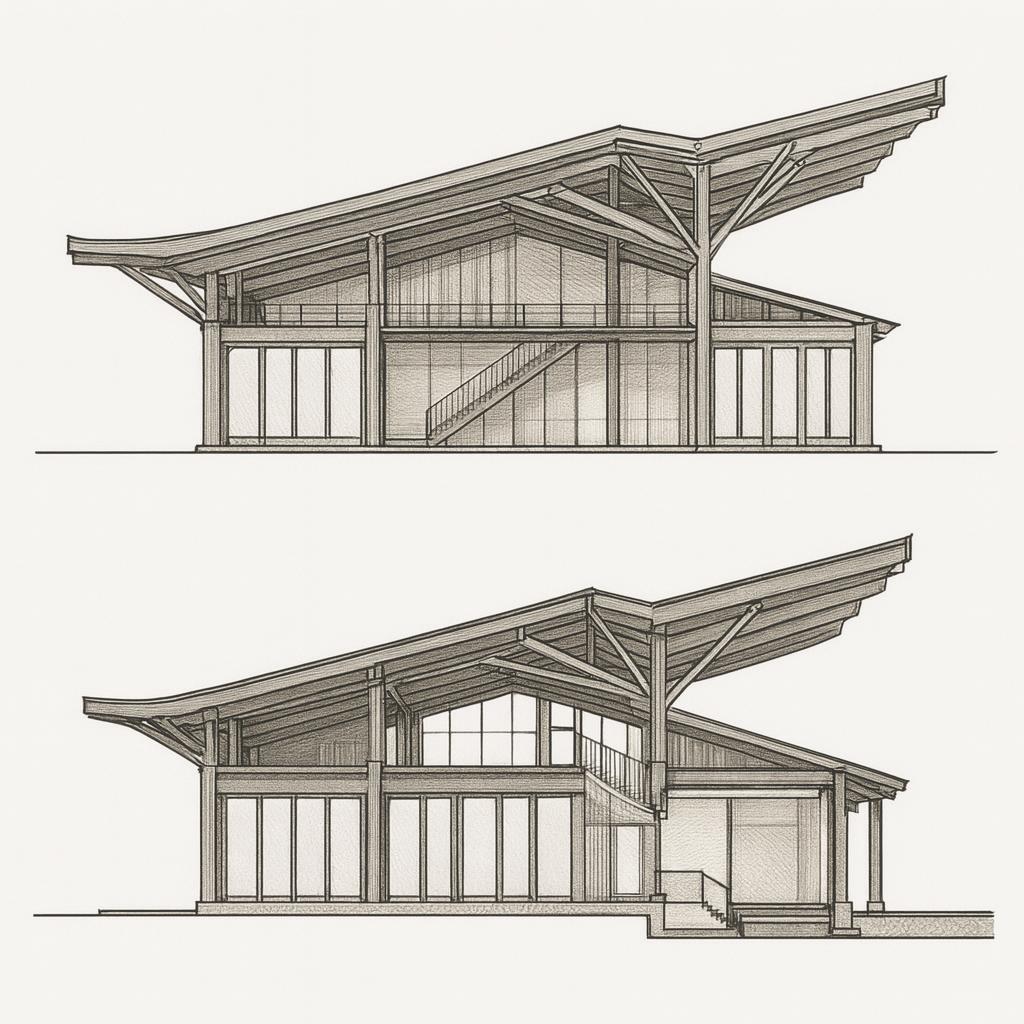
Timber Canopy Civic Pavilion in San Francisco
In the heart of San Francisco, the Timber Canopy Civic Pavilion emerges as an intriguing example of adaptive reuse. Situated at the edge of an undeveloped landmark site, the pavilion speaks to its urban and natural surroundings through a thoughtful integration of materiality and spatial design.
Contextual Design and Site Integration
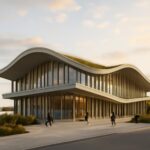
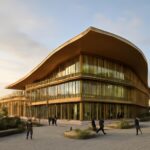
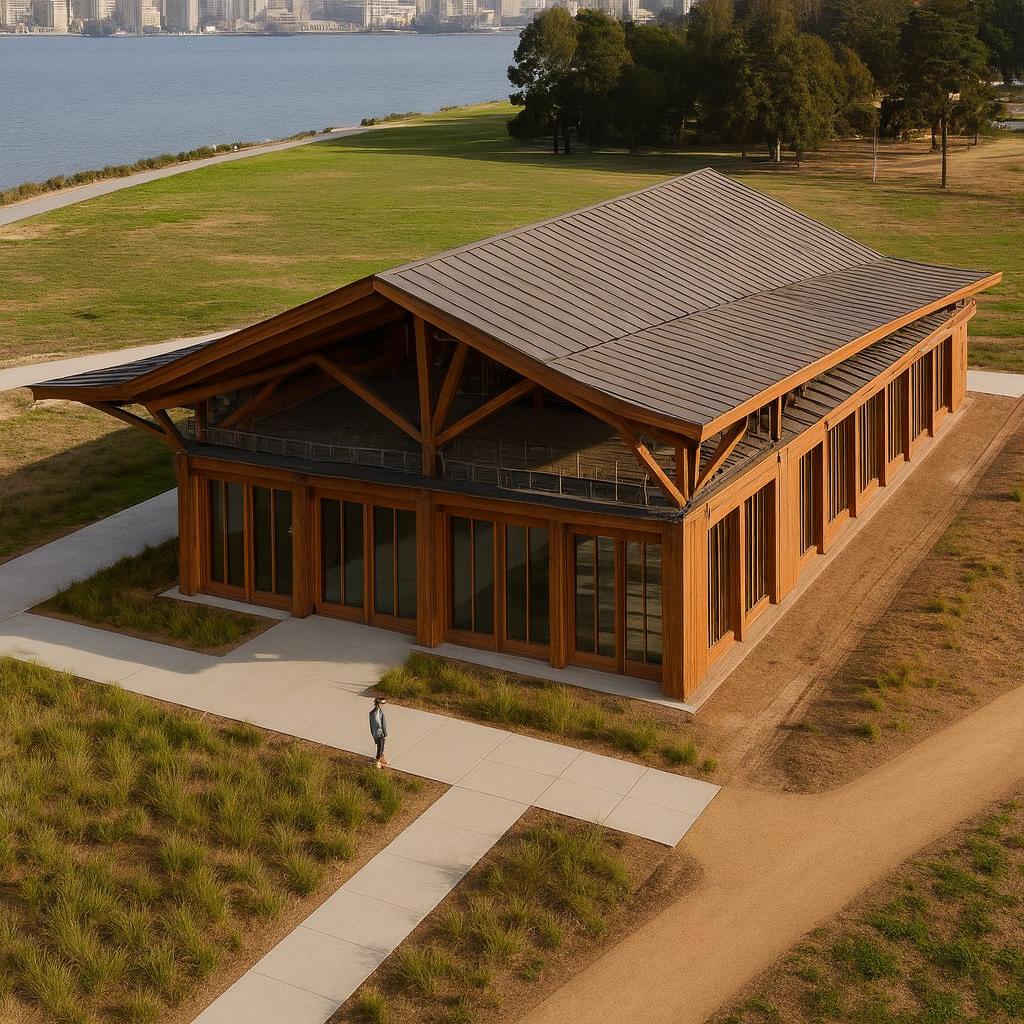
Sitting just a stone's throw from the bay and cityscape, the pavilion offers sweeping views that enhance its civic purpose. The surrounding landscape of grass and paved walkways provides a tranquil setting, inviting both community interaction and quiet introspection. This contextual awareness is further strengthened by the building's expansive, horizontal massing that echoes the site’s natural topography.
Materiality and Structure
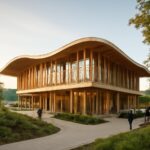
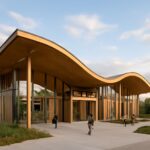
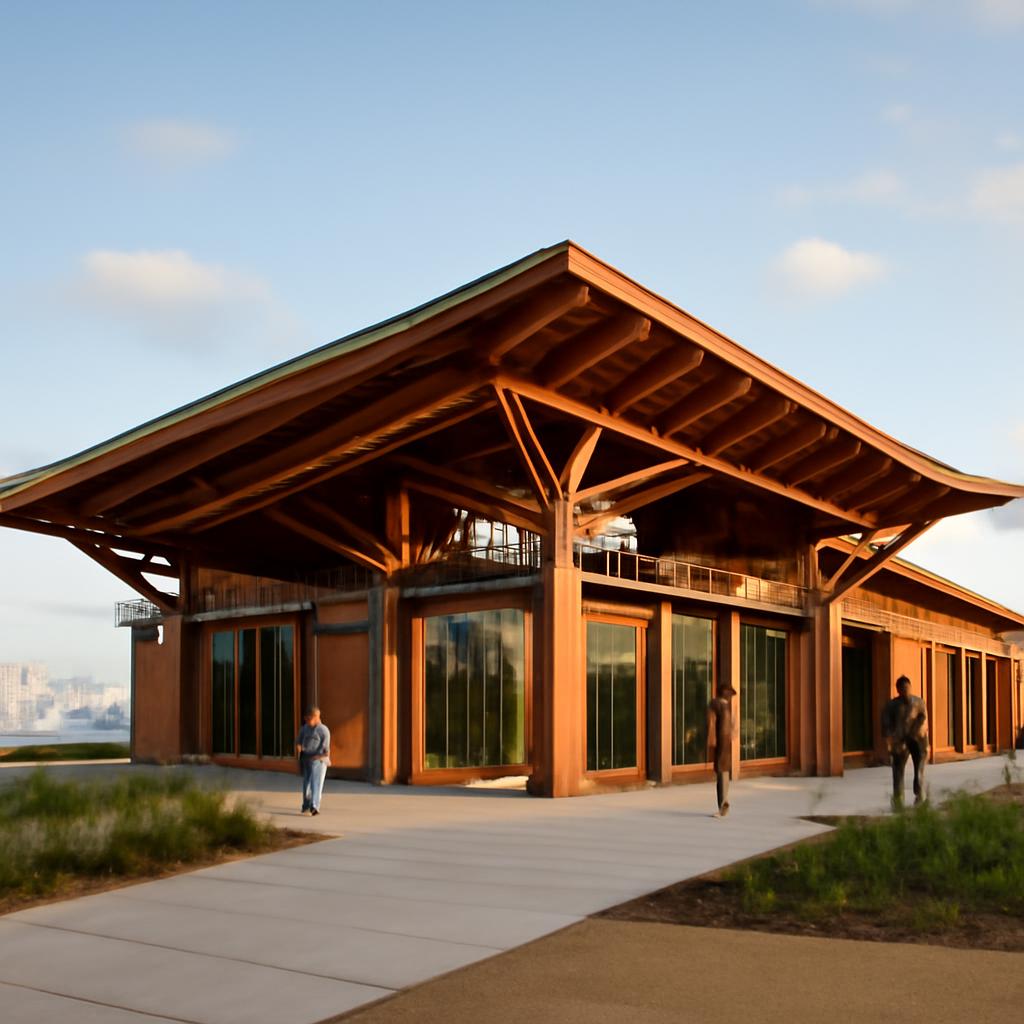
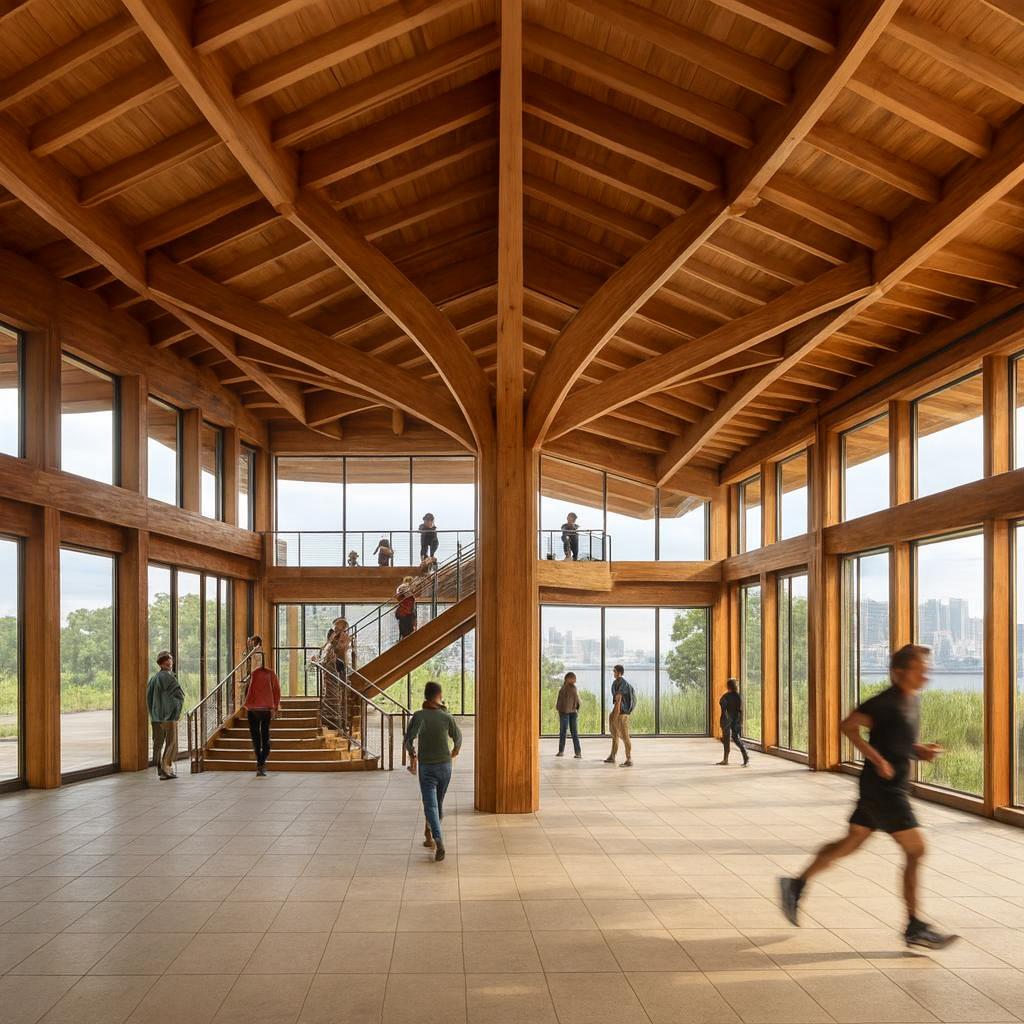
The pavilion's structure is a harmonious blend of weathered steel and timber. This material palette not only evokes a sense of warmth but also ensures durability. Exposed timber ribs create a striking interior and exterior aesthetic, providing both structural support and a textural counterpoint to the sleek glass facades. Weathered steel accents add a layer of industrial robustness, anchoring the pavilion firmly in its urban milieu.
Facade and Roofline Characteristics
The pavilion is defined by a prominent, asymmetrical roof that extends beyond the building's footprint. This canopy is not merely aesthetic; it provides sheltered public gathering spaces. The facade features a rhythmic arrangement of timber and steel, alternating between solid and transparent to foster a dynamic interaction with the environment. Large, operable glass panels afford natural ventilation, while louvered shading elements manage glare and maintain views.
Sustainability Features
Sustainability is ingeniously woven into the architectural fabric of the pavilion. A rainwater harvesting system is integrated into the roof, channeling water into a small onsite garden that enhances biodiversity while mitigating stormwater runoff. Furthermore, the extensive use of glass ensures natural daylight permeates the interior, reducing energy consumption associated with artificial lighting.
Spatial Organization and Circulation
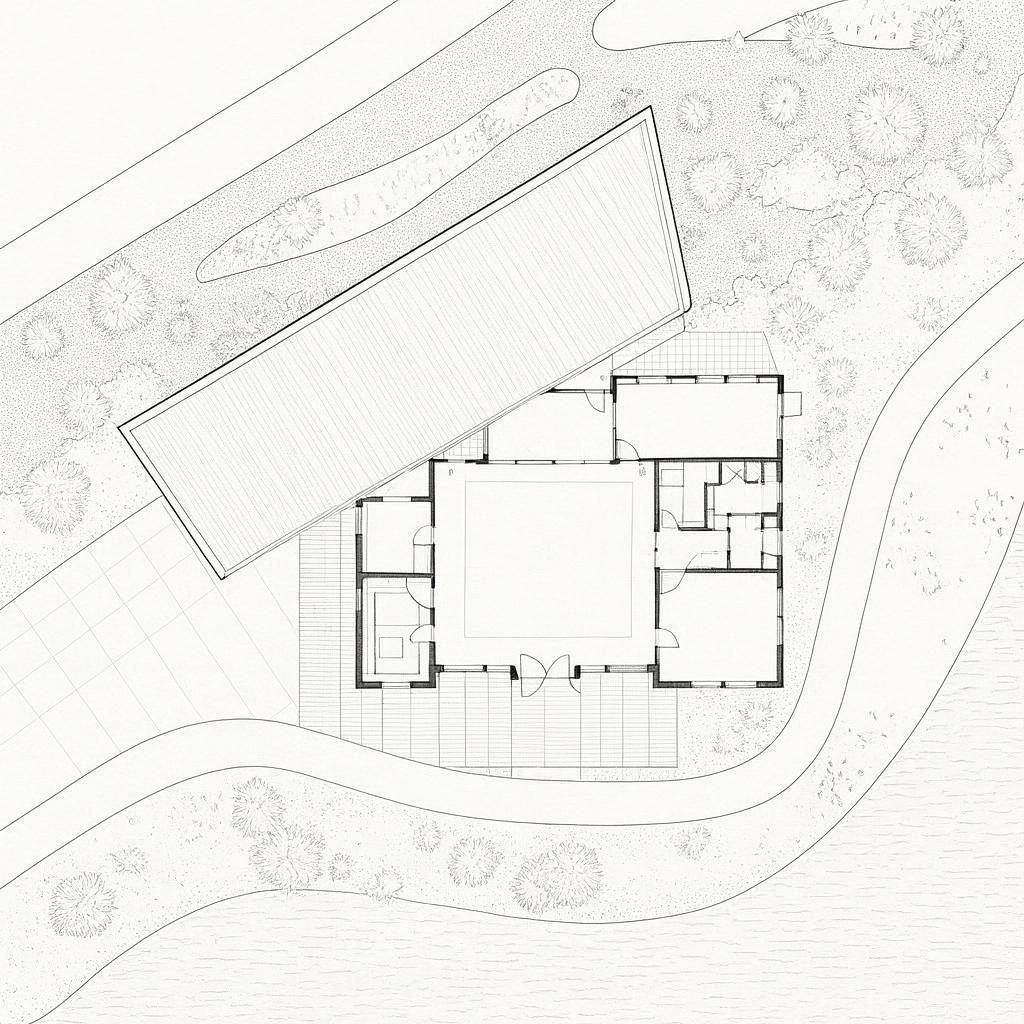
The pavilion's single-story, open floor plan is designed for flexibility in community use. Semi-enclosed spaces provide intimate alcoves, while the central atrium remains a hub of activity. Circulation is intuitive, with wide pathways inviting exploration and interaction. The entry is recessed, creating a welcoming approach that seamlessly connects the interior with the exterior landscape.
Key Features at a Glance
| Design Element | Details | Impact |
|---|---|---|
| Roofline | Asymmetrical timber canopy | Creates dynamic shadows and shelter |
| Facade | Timber and weathered steel frame | Balances transparency and privacy |
| Sustainability | Rainwater harvesting system | Enhances biodiversity and reduces runoff |
Conclusion
The Timber Canopy Civic Pavilion succeeds as an embodiment of architectural reflection on nature and urbanity. It represents a thoughtful architectural intervention that responds to its context through careful material choices, structural innovation, and sustainable practices.
One might ponder: how does the pavilion manage to balance its bold architectural statement with the subtlety required for community acceptance and engagement?