Exploring the Chicago Bubbly Creek Civic Canopy Study
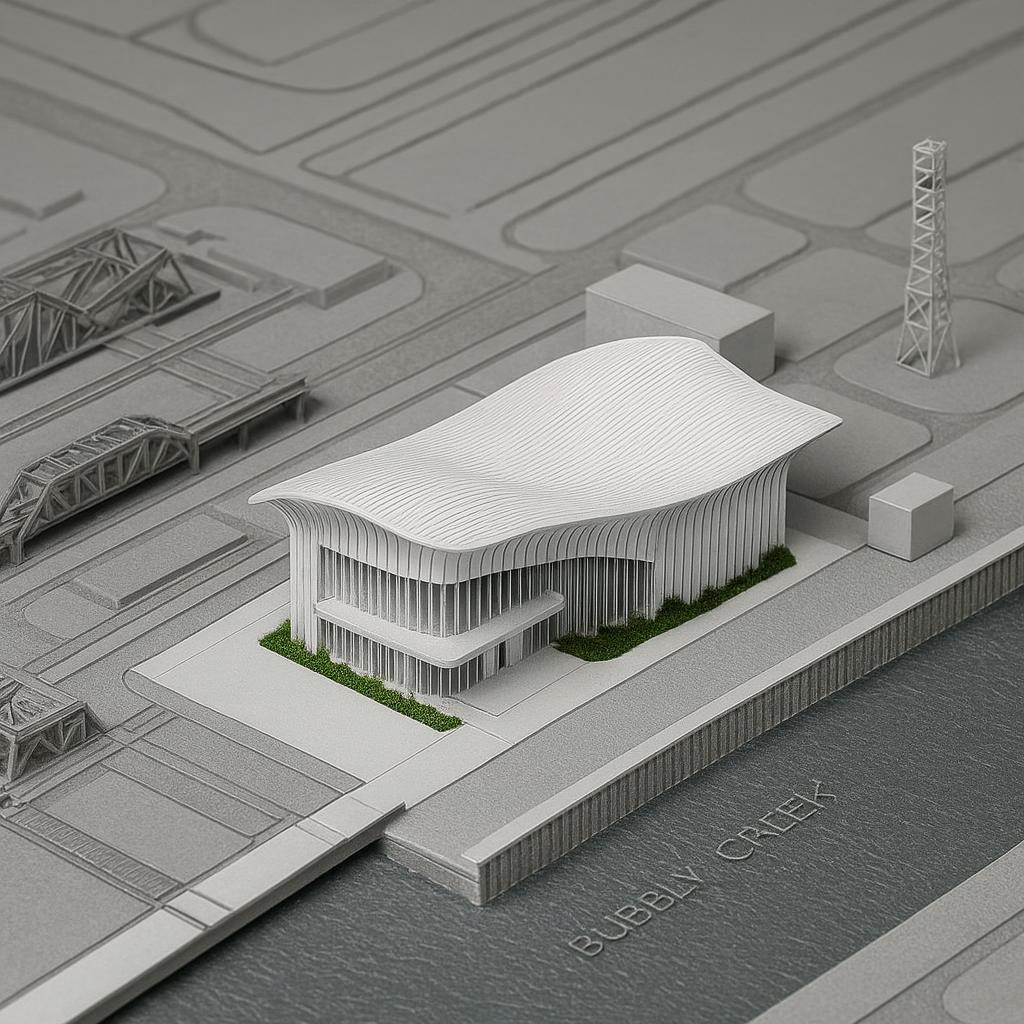
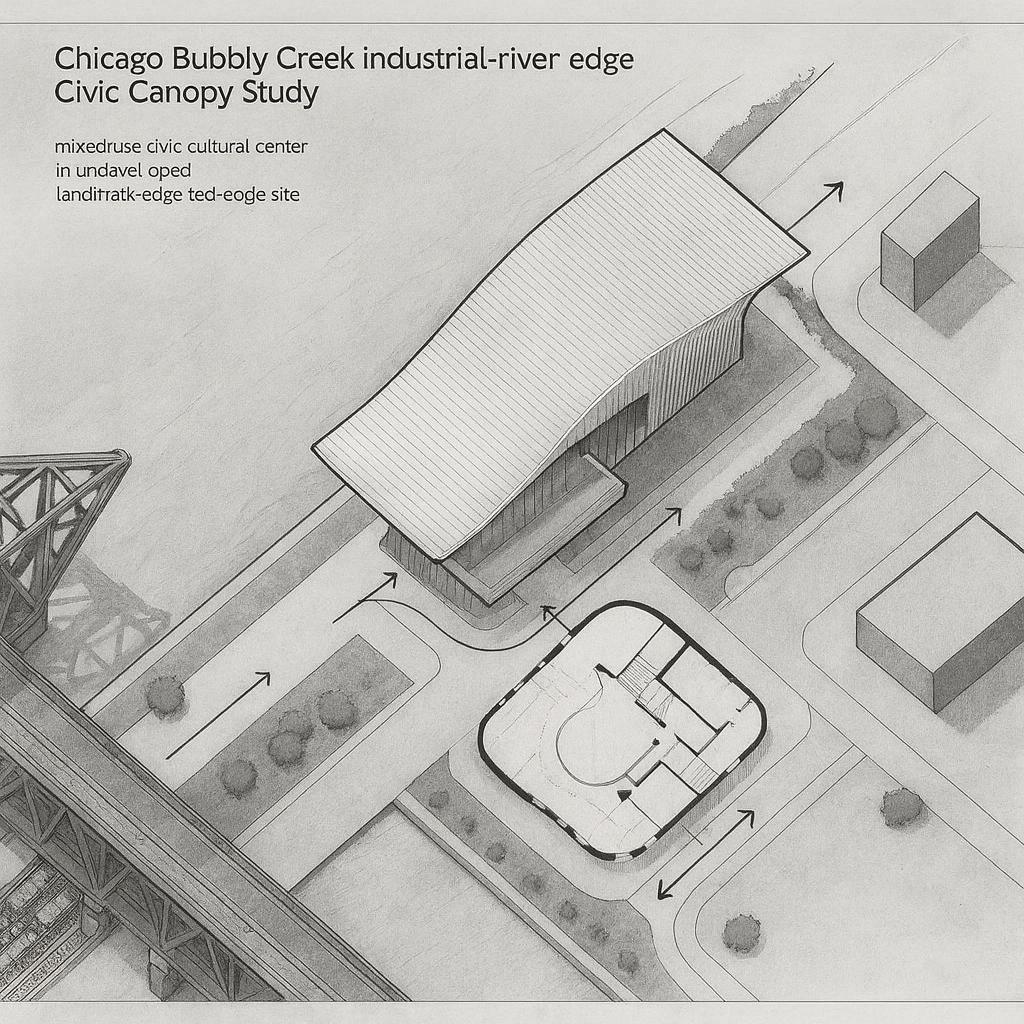
Set against the backdrop of Bubbly Creek, an overlooked tributary of the Chicago River, the Chicago Bubbly Creek industrial river edge Civic Canopy Study presents a provocative exploration of urban infill. This conceptual architecture study attempts to reconcile Chicago's industrial legacy with its future civic needs, focusing on site-specific design solutions and sustainability. Notably, it challenges the privatization of public riverfronts, encouraging public dialogue on the use of this complex urban edge.
Design Anchors and Contextual Relevance
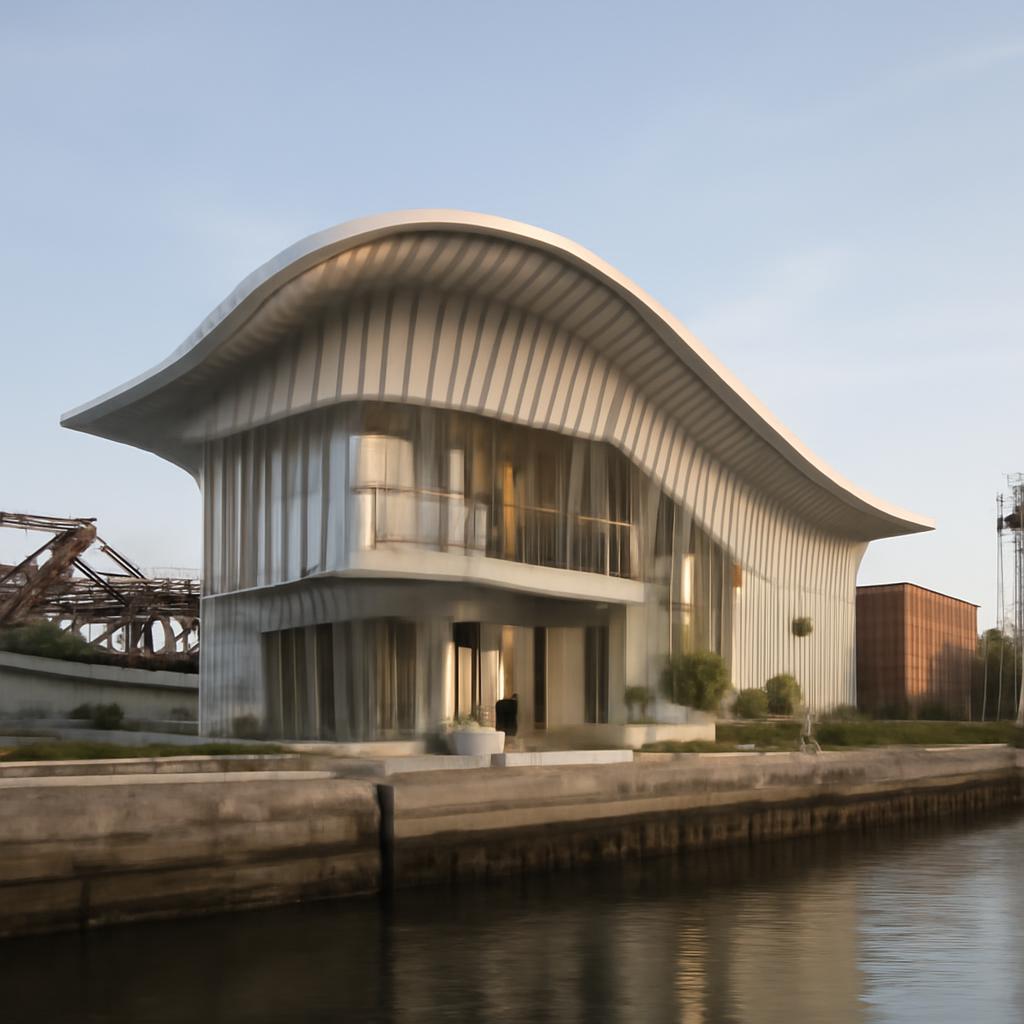
The Civic Canopy Study is designed to be deeply embedded within its hyperlocal context. Anchored by the historical remnants of limestone and brick from old industrial sites, as well as the steel sheet piling common to Chicago's riverbanks, the structure integrates seamlessly with its surroundings. The building’s unique form is inspired by adjacent rail viaducts and industrial sheds, adding layers of narrative and history to the design. The study thoughtfully addresses local concerns such as flood risk and adaptive reuse, utilizing sustainable materials like silver aluminum lattice and clear glass tubes to create a dialogue between these elements.
Architectural Integrity and Form
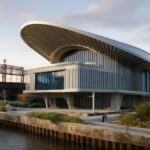
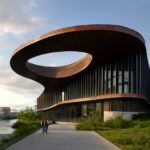
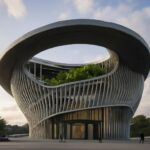
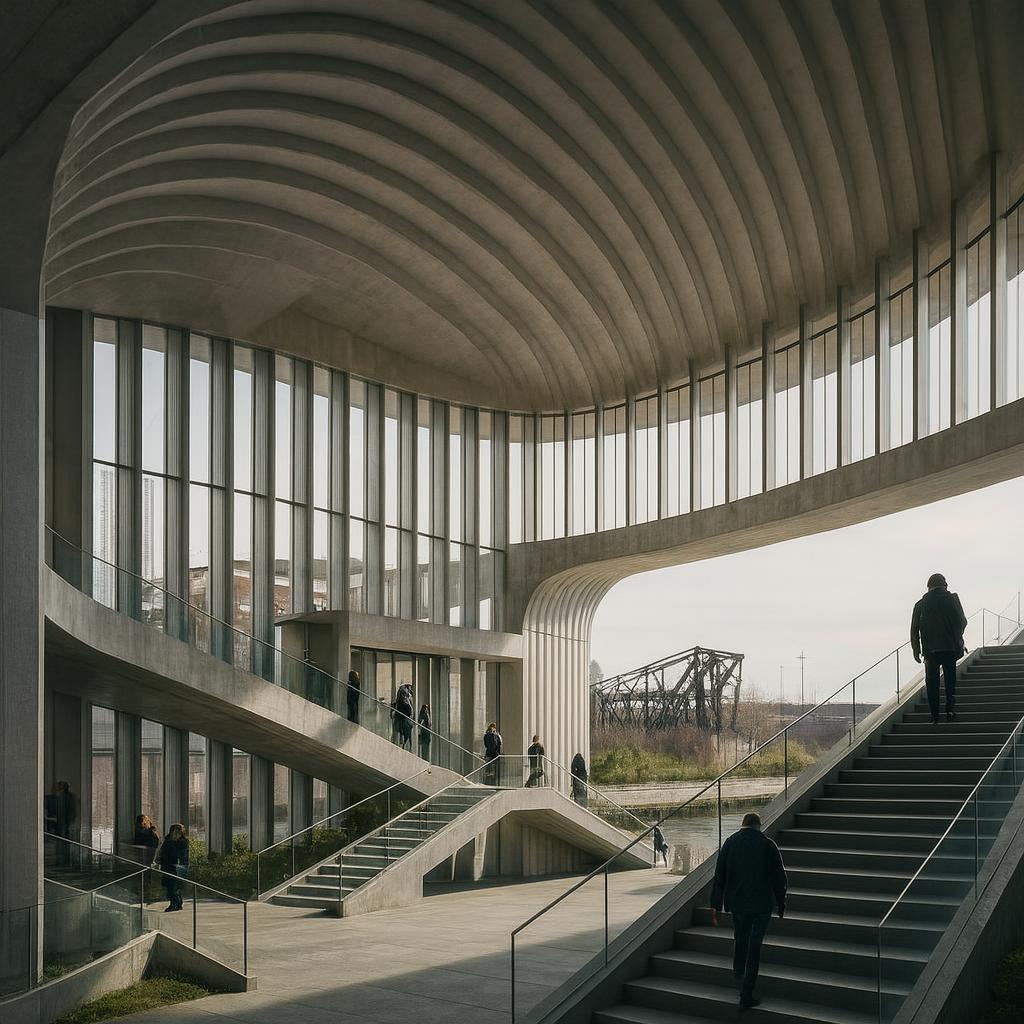
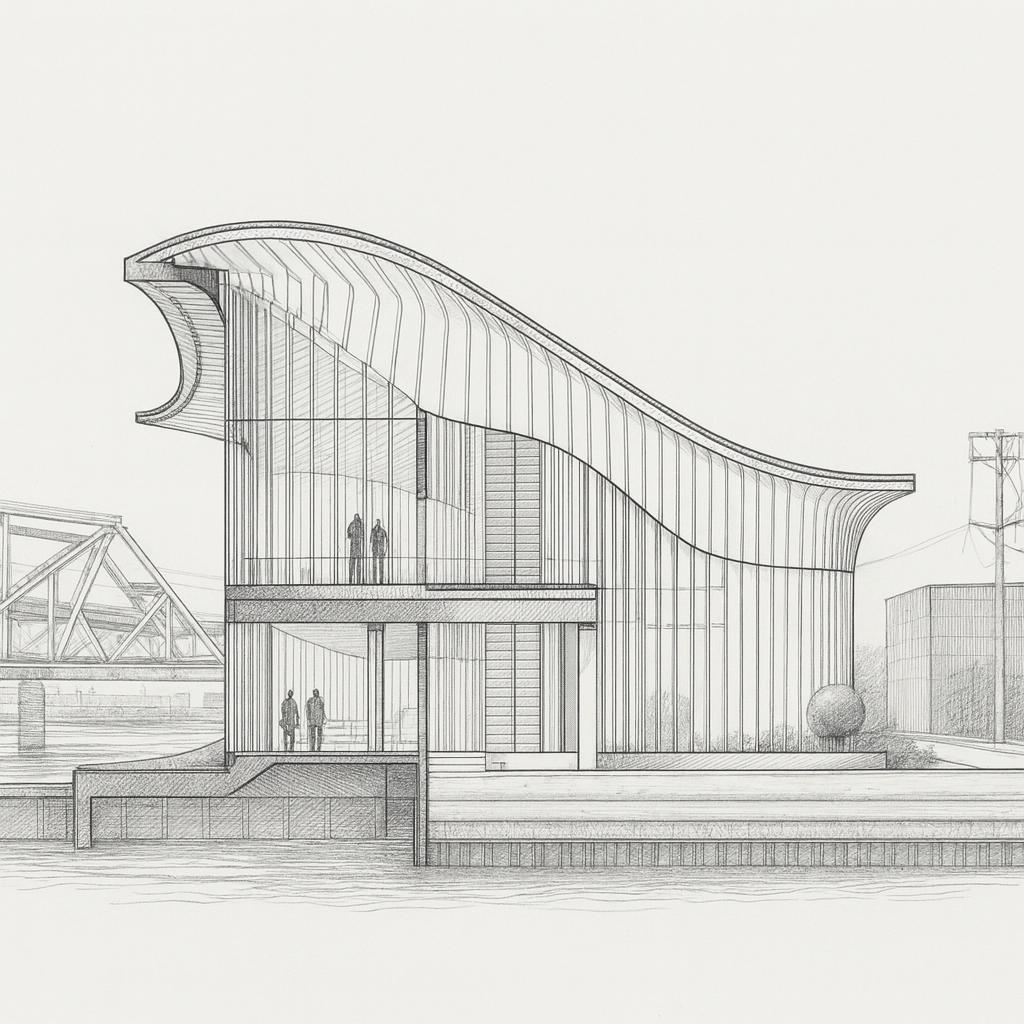
The project's massing is characterized by a dynamic, flowing roofline inspired by the Crater Courtyard Ecology Center. The roof, with its ribbed organism-like structure, is poised as a significant feature, offering both functional shading and a bold visual statement. Its continuous ribbed facade bands further emphasize the building's verticality and curvature. The ecological intent is expressed through planted terraces and aquatic plantings that softens the building's interface with the riverfront.
Structural and Material Logic
The building's design highlights a visible structural grid composed of steel ribs and bays, which supports the undulating roofline and extensive glazing, emphasizing architectural legibility and honesty. The use of high-performance glazing and titanium shading fins underlines the project's commitment to energy efficiency and environmental responsiveness.
Public and Private Tensions
The civic center's purpose is multifaceted, grappling with the public and private tension inherent in urban waterfront development. It invites discourse on privatization, industrial reuse, and community adaptation to climate risks. By maintaining public access to the waterfront and integrating local industrial textures, the building becomes a vessel for public interaction and engagement.
Spatial and Programmatic Innovation
The interior architecture is illuminated by generous daylight through large floor-to-ceiling windows, creating an inviting civic space. The internal circulation features ramps and bridges that echo the exterior's flowing form, fostering movement and exploration within the building. This creates a spatial journey from constrained entrances to open public chambers, manifesting the uncanny yet inviting spatial sequence that defines the project's narrative.
Material Palette and Table Overview
The materials used in this study are carefully chosen to align with the industrial aesthetic and the cold Midwestern climate:
| Material | Purpose | Characteristics |
|---|---|---|
| Silver aluminum lattice | Facade structure | Durable, reflective, lightweight |
| Clear glass tubes | Transparency and light | High-performance, energy-efficient |
| Pale stone and aquatic planting | Site integration | Natural texture, ecological |
Final Reflection
This architectural concept raises intriguing questions about the future of urban riverfronts in post-industrial cities like Chicago. It highlights the potential for architecture to act as a mediator between past industrial uses and future communal needs. As such, design professionals and civic planners might ponder: How can urban designs balance respecting local history and ecology with the growing demands for public accessibility and sustainability?