The Site and Context of the Kinetic Solar Pavilion
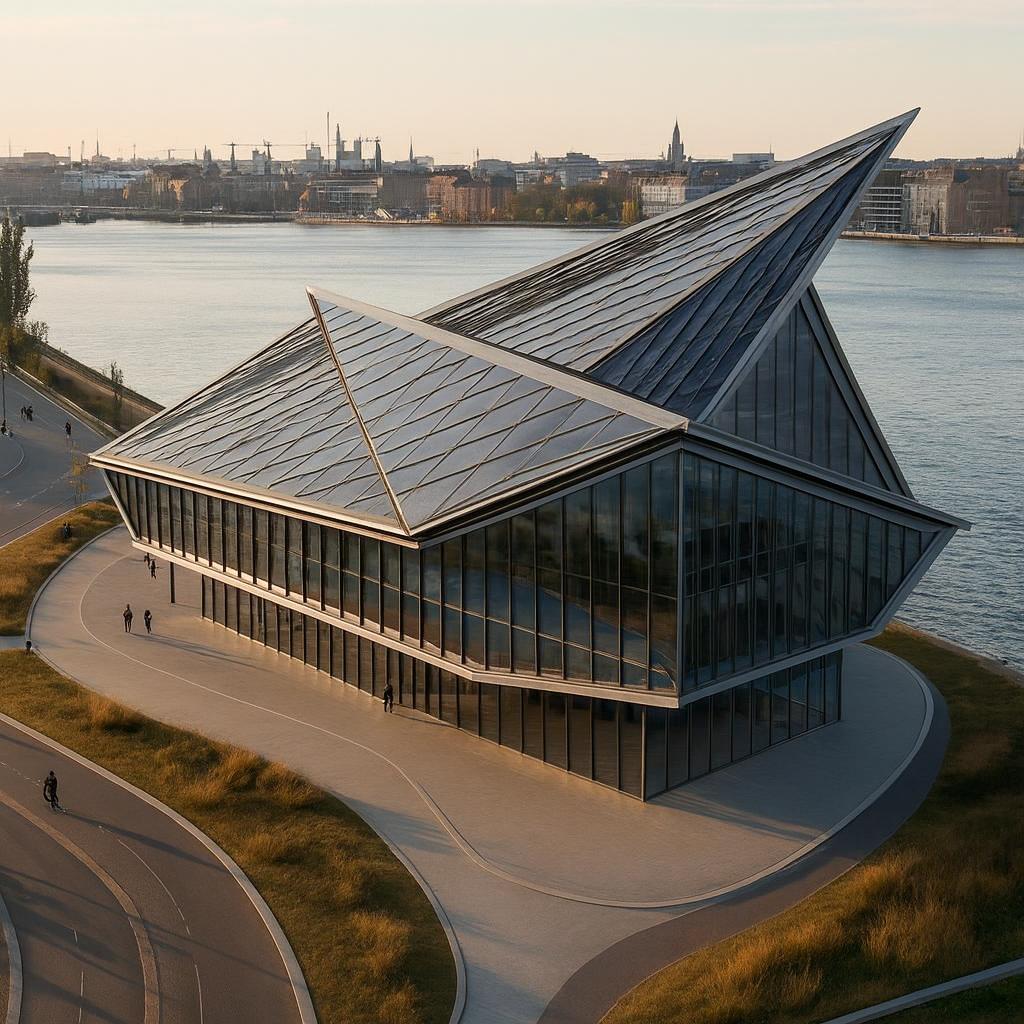
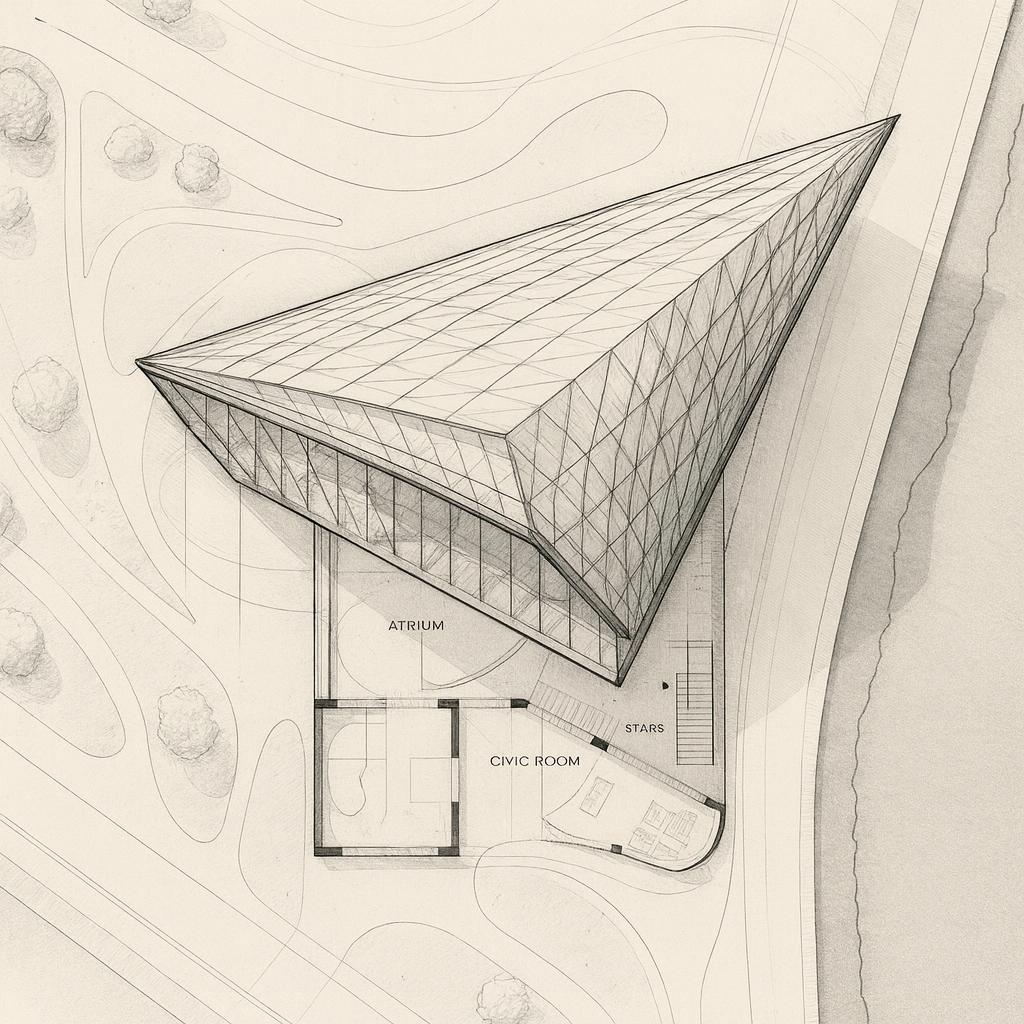
Situated on the waterfront edge of Copenhagen, the Kinetic Solar Pavilion emerges as a civic hub that is both a response to and a part of its environment. The site's proximity to water and urban landscapes offers a unique context that informs the pavilion's conceptual and material decisions. The pavilion's placement on an undeveloped landmark-edge site allows it to act as a bridge between natural elements and urban life, creating a dynamic interaction with its surroundings.
Massing and Roofline Dynamics
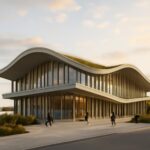
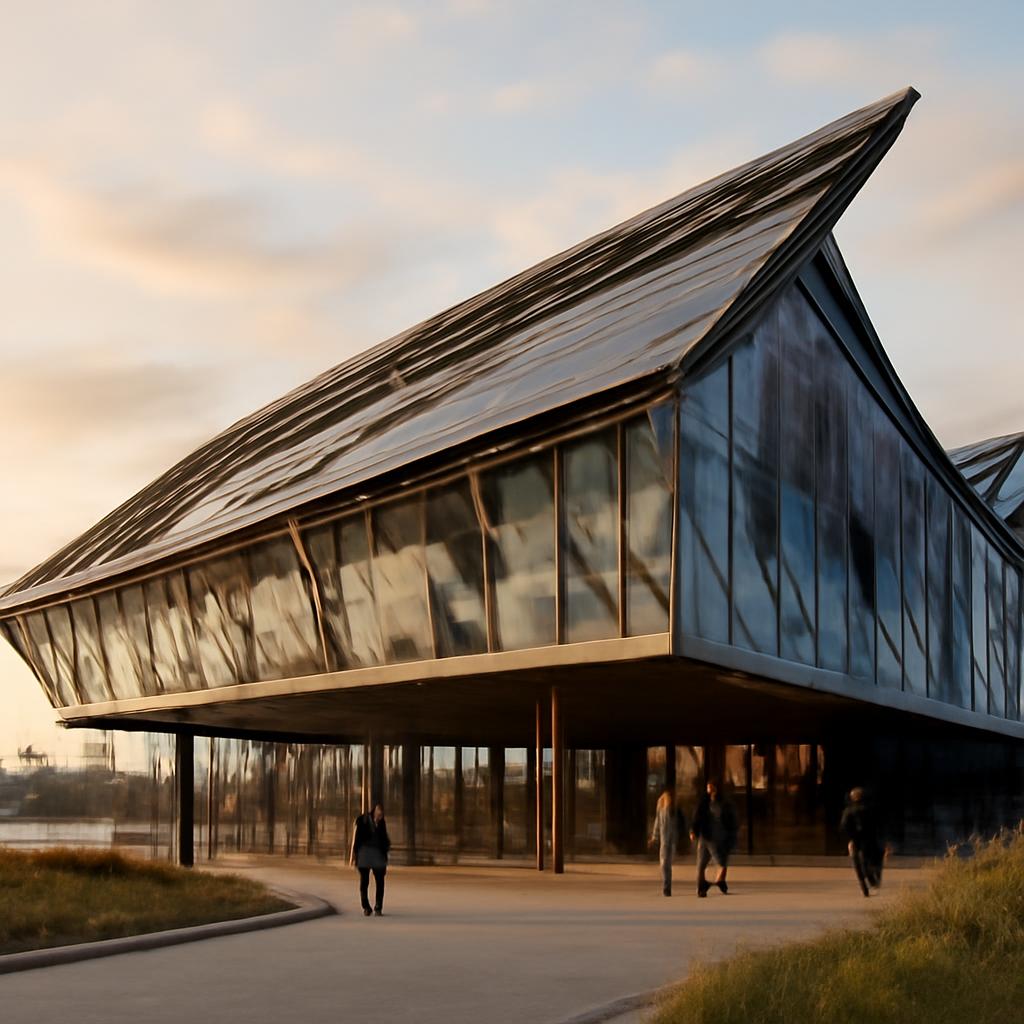
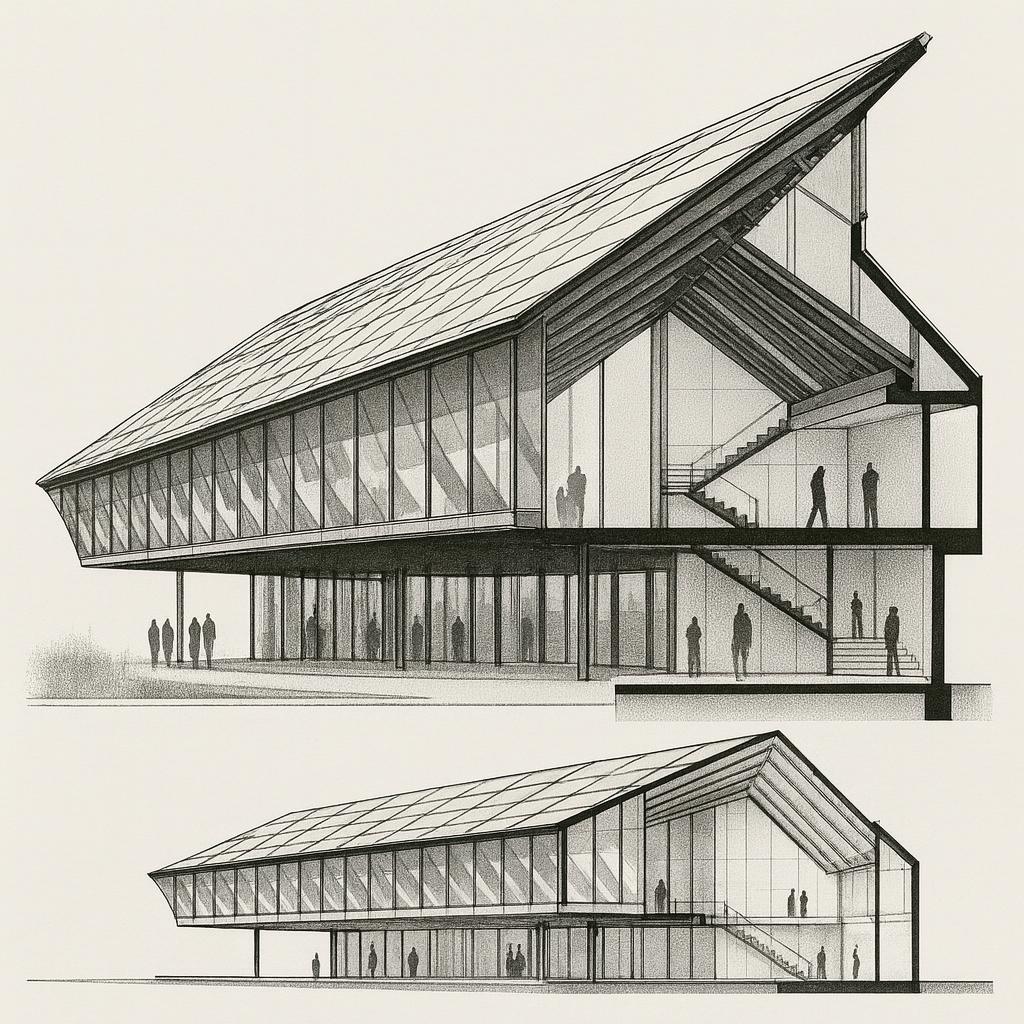
The pavilion's massing employs two staggered rectangular floor plates, which create a layered public realm at the ground level. This approach not only maximizes usable space but also fosters social engagement through integrated market areas and open spaces. The roofline, a series of sharply angled planes, acts as both a visual signature and a functional element. It is designed to respond to solar orientation, offering shade and shelter, while also creating a memorable silhouette against the skyline.
Facade and Structural Language
A framework of steel supports the pavilion's kinetic facade, composed of photovoltaic glass panels. These panels perform a dual role: capturing solar energy and providing a responsive shading solution. The facade's rhythm is orchestrated through alternating triangular segments of glass, which are designed to pivot in relation to the sun's path, enhancing energy efficiency. This meticulous arrangement results in a facade that is as visually engaging as it is functional, reflecting the surrounding environment in a dance of light and shadow.
Interior Experience and Circulation
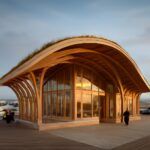
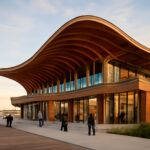
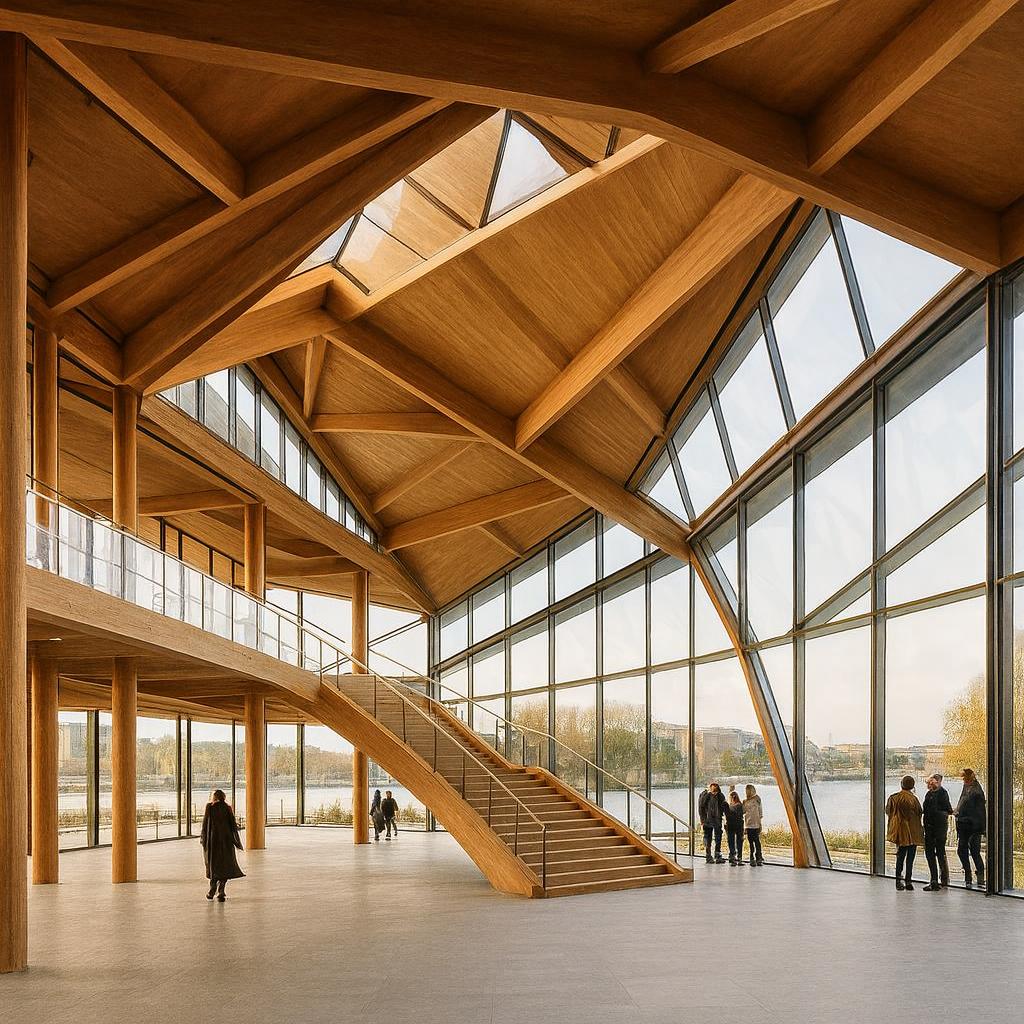
Inside, the pavilion reveals an atrium bathed in generous daylight, supported by visible timber ribs that echo the exterior language. The interior is marked by a seamless circulation system of stairs and ramps, encouraging public use and accessibility. The choice of materials continues to provide a warm contrast, reinforcing the pavilion’s role as a community-centric space. The integration of waterfront and landscape elements into the interior ensures a constant dialogue between the inside and outside, enhancing the pavilion's connection to its surroundings.
Sustainability Measures
The Kinetic Solar Pavilion embodies sustainability not merely in its photovoltaic facade but through a comprehensive approach that includes a rainwater collection system. This system feeds into green rooftop gardens, promoting an ecological balance and enhancing the building's energy profile. The use of advanced materials and responsive design strategies positions the pavilion as a thoughtful addition to the urban context, making renewable energy a visible and integral aspect of its architecture.
Key Design Features
| Feature | Function | Impact |
|---|---|---|
| Angled Roofline | Solar Orientation | Energy Efficiency, Urban Silhouette |
| Photovoltaic Glass | Energy Harvesting | Renewable Energy, Shading |
| Layered Floor Plates | Public Engagement | Social Interaction, Market Space |
A Question of Balance
As we consider the architectural intentions behind the Kinetic Solar Pavilion, a question arises: How might the kinetic aspects of the facade influence user interaction and perception, particularly as technology evolves?