Harbor Canopy Pavilion: A Study in Warm Nordic Public Architecture
A Harmonious Site Response
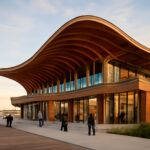
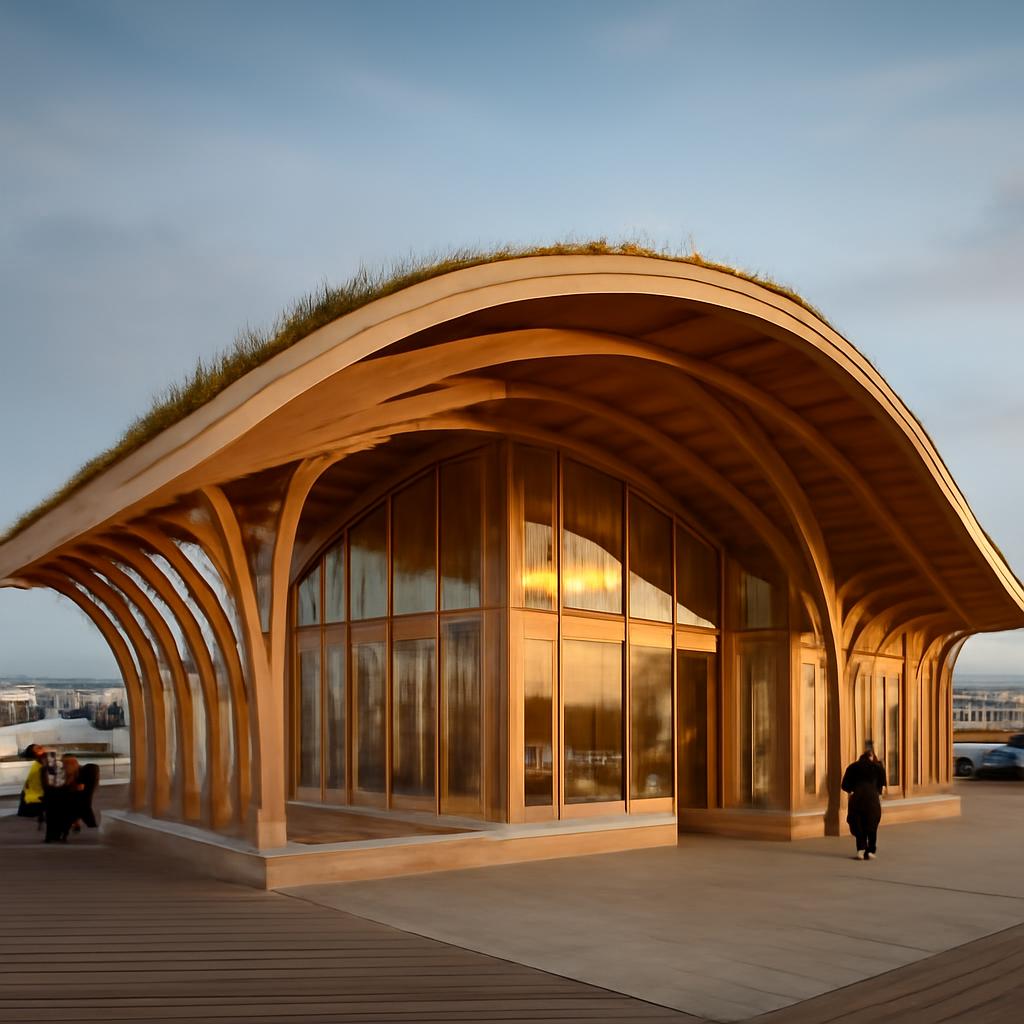
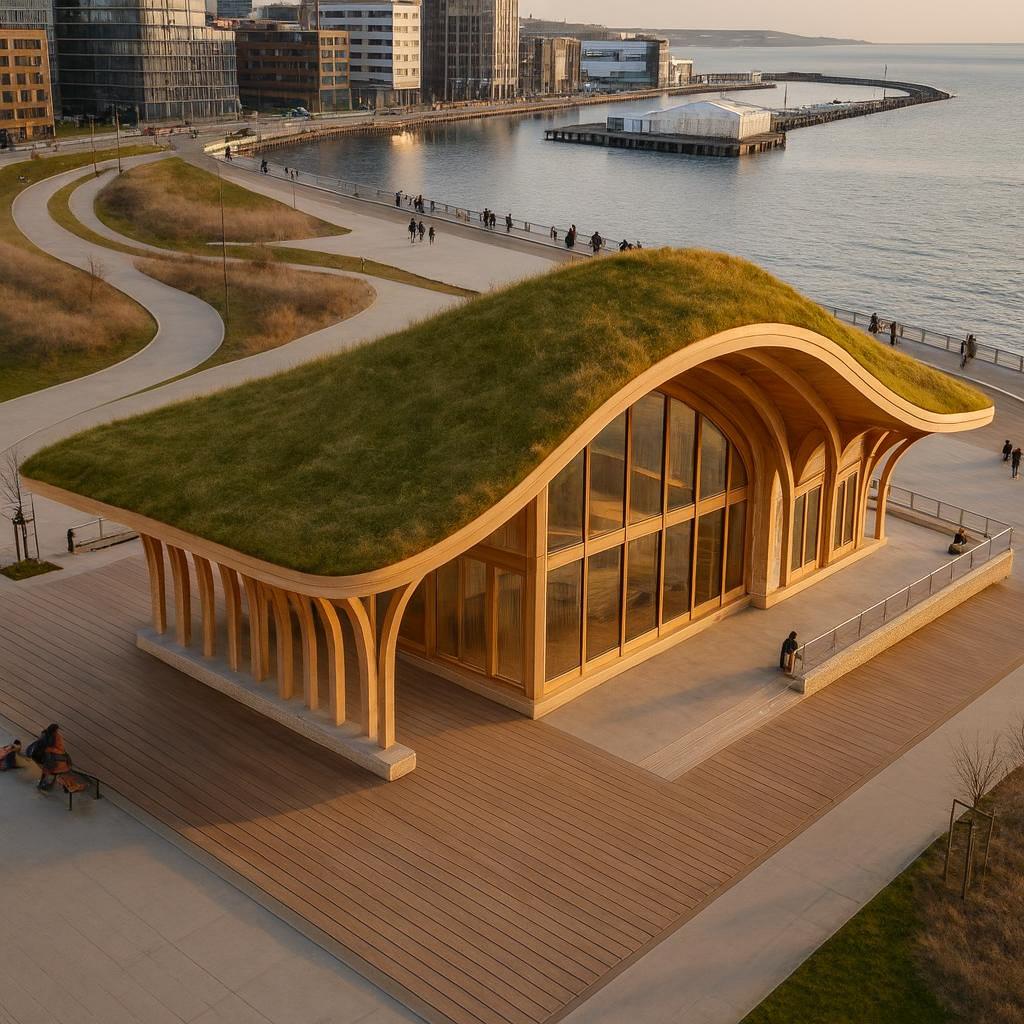
Situated in the harbor bath district of Aarhus, the Harbor Canopy Pavilion epitomizes a fusion of natural elements and urban context. This public civic space stretches alongside the timber promenade, interacting seamlessly with the ferry terminal edge to encourage a fluid engagement with the waterfront. The structure's undulating form is not merely aesthetic; it reflects a sensitive response to its coastal environment, allowing the pavilion to coexist rather than compete with its surroundings.
Massing and Structure
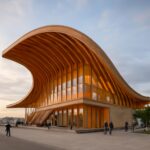
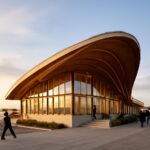
The pavilion's massing is deliberately restrained, comprising a single-story open plan beneath a gracefully sloping roof. This gently cascading form curves downward toward the promenade, creating an inviting portal. The roof's curvature is reflected in the laminated timber ribs that define the structure's silhouette, giving rise to a robust yet elegant canopy that shelters the central gathering space while allowing ample natural light to filter through.
Envelope and Facade Details
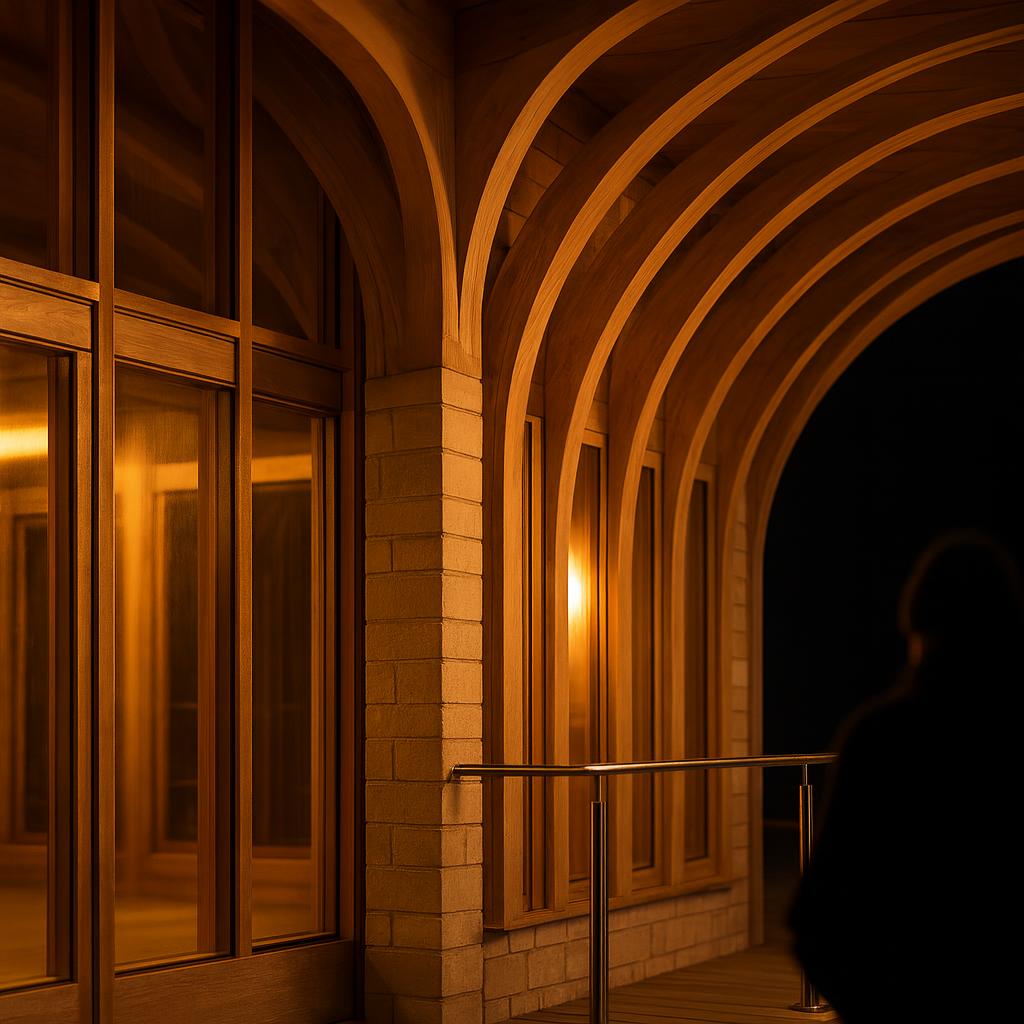
The facade of the Harbor Canopy Pavilion is a study in rhythmic contrast. Composed of alternating vertical timber ribs and amber-tinted glass panels, the facade deftly balances transparency and enclosure. The pale brick framing these elements adds texture and warmth, while stainless steel railings articulate the edges, enhancing the pavilion's connection to its context. The facade's rhythm is a dynamic play of light and shadow, lending the building a distinctive identity.
| Material | Description | Purpose |
|---|---|---|
| Curved Laminated Timber | Used for the ribs of the roof structure | Support and aesthetic appeal |
| Pale Brick | Frames the facade glazings | Provides texture and warmth |
| Amber Glass | Facade panels | Transparency and natural light |
Circulation and Interior Space
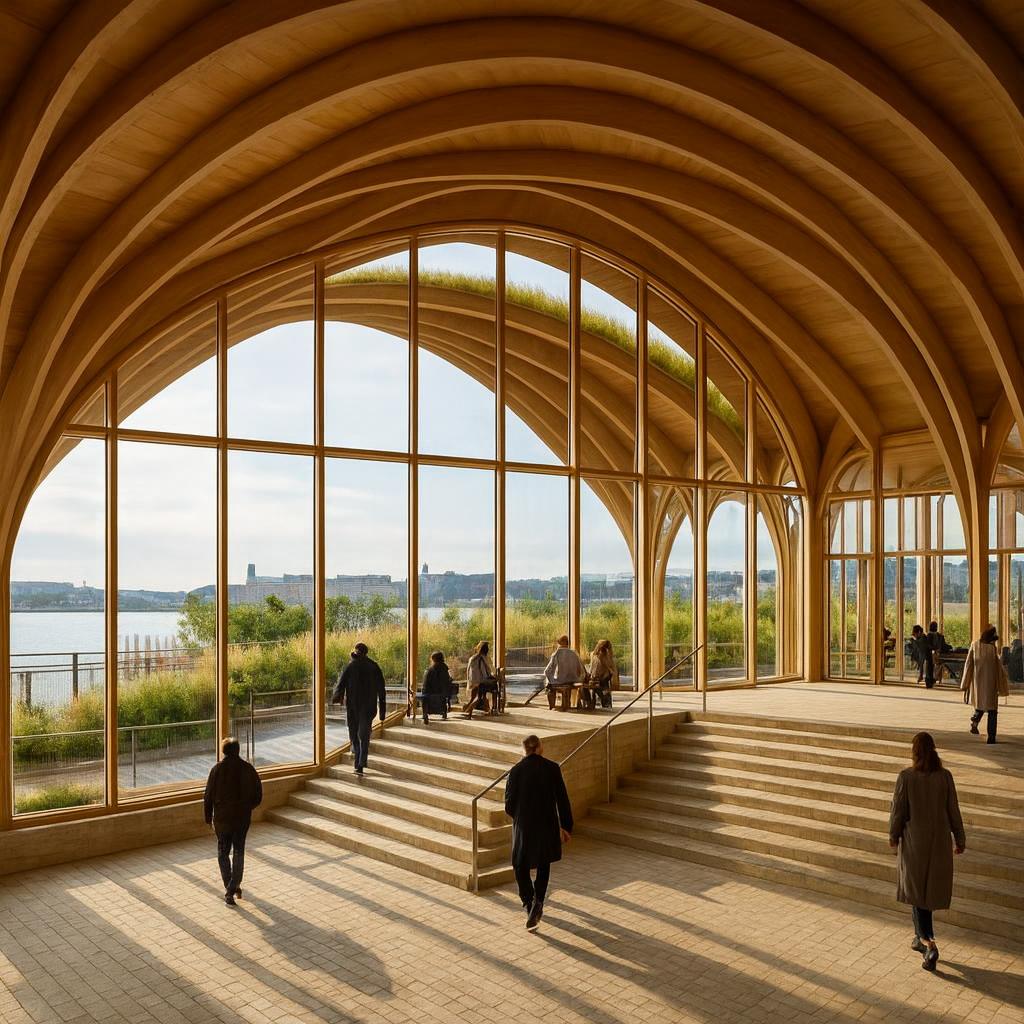
Internally, the pavilion maintains a cohesive dialogue with its exterior elements. The curved timber ribs extend into the atrium, echoing the structural language of the roof. This interior space is accentuated by generous daylight, creating a welcoming environment for civic engagement. The interior layout prioritizes social interaction, with stairs and ramps designed to guide visitors through the space with ease, reinforcing the structure's public use.
Sustainability and Environmental Considerations
The sustainability credentials of the Harbor Canopy Pavilion are integral to its design. Featuring planted roof terraces with native vegetation, the building promotes biodiversity and reduces stormwater runoff. The terraces also provide natural insulation, while the integrated rainwater harvesting system supports irrigation. These elements not only underscore the pavilion’s ecological responsibility but also enhance its aesthetic appeal.
Conclusion: A Point for Reflection
In creating a space that marries form and function so seamlessly, the Harbor Canopy Pavilion raises intriguing questions about the role of architecture in fostering public interaction with natural landscapes. As we consider this design, one must ask: How can architects further integrate ecological responsibility into the public realm without compromising on aesthetic or functional values?