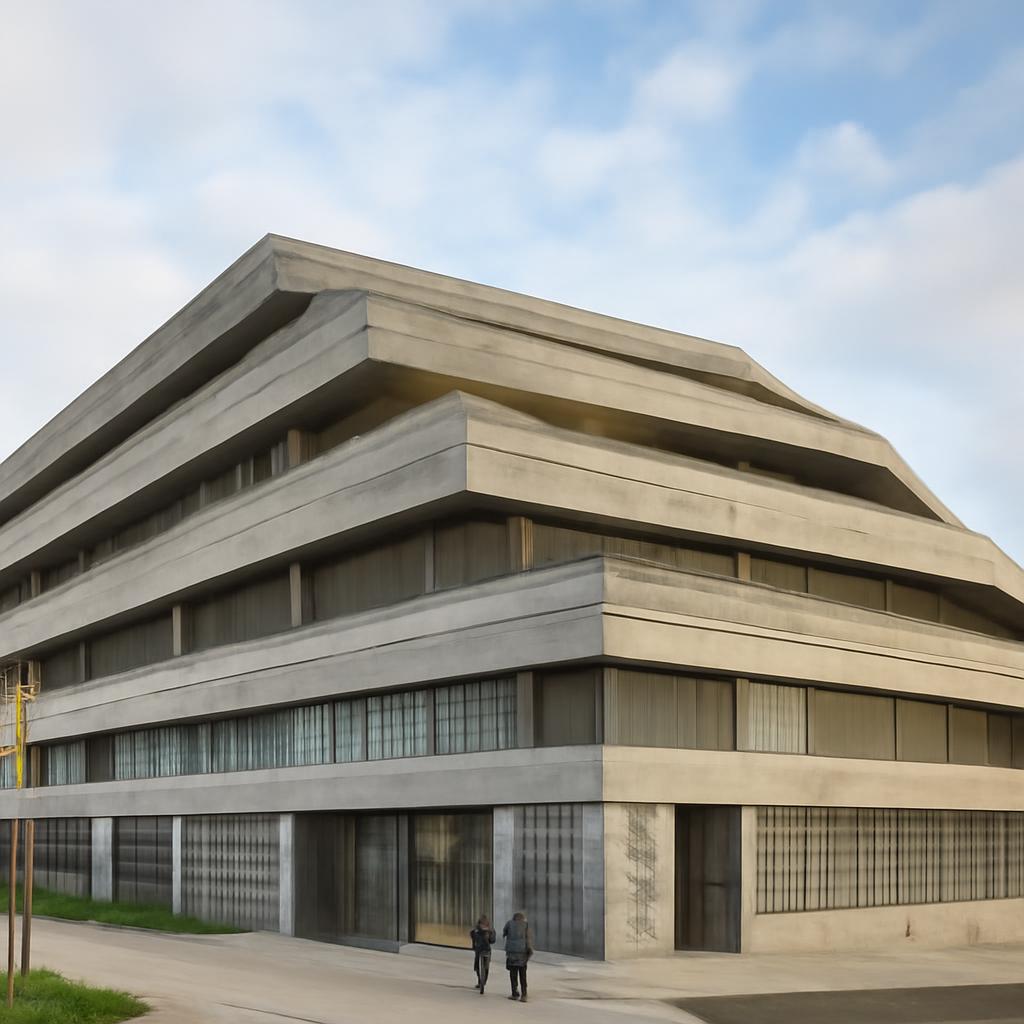

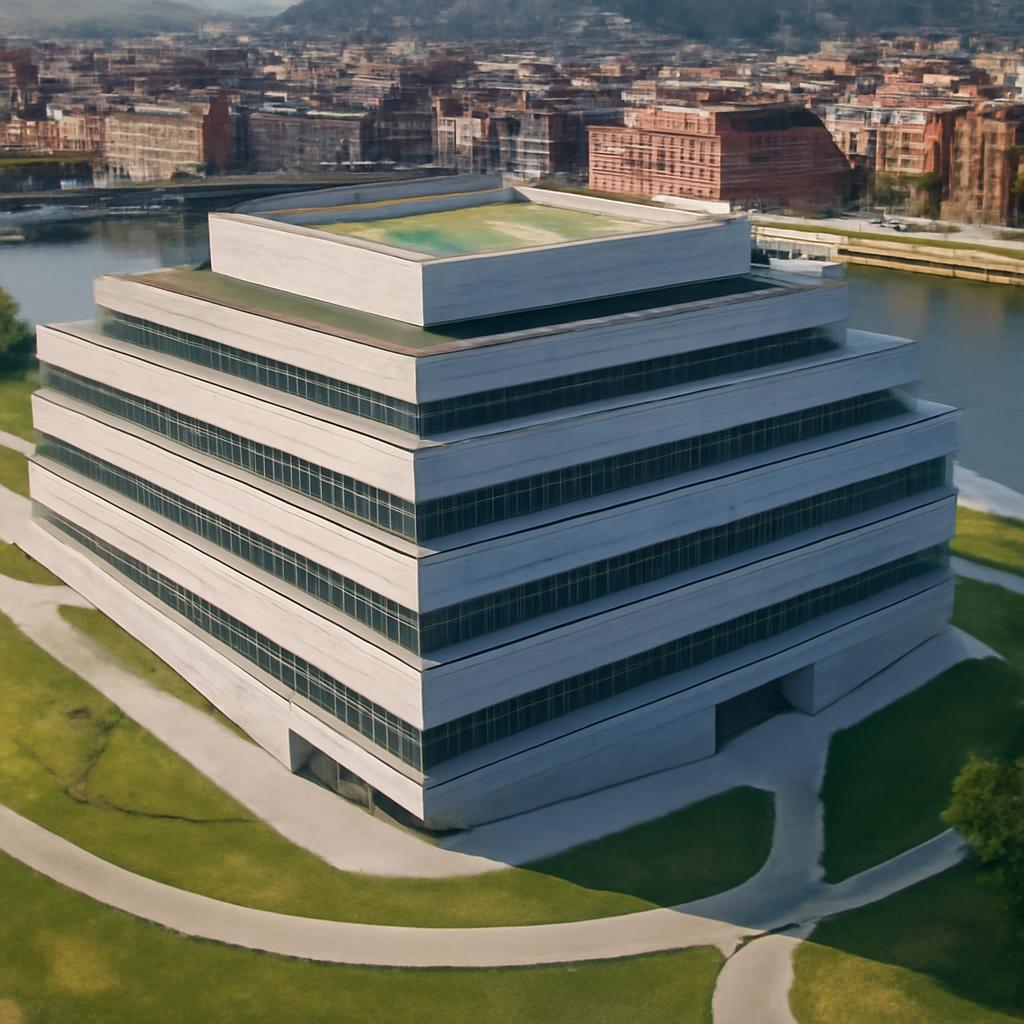

Bilbao River Archive and Workshop is a speculative civic building concept for a riverfront site in Bilbao. The strongest idea is clear: a low, terraced archive and making space that tries to mediate between industrial memory, public access, and the softer edge of the river.
Why the Concept Works
The massing has a readable civic presence without becoming a monument for its own sake. The stepped roofline gives the building a believable relationship to the riverbank, while the horizontal concrete bands make the project feel grounded and durable. For an archive-workshop hybrid, that solidity is useful: it suggests storage, craft, weathering, and institutional memory.
Site and Riverfront Response
The project is most convincing when read as a river-edge building rather than a standalone object. A stronger final version should show how people arrive from the street, how the ground floor opens to the promenade, and where workshop activity becomes visible from outside. Those urban seams matter because they decide whether the building feels public or merely picturesque.
Massing and Structure
The layered form gives the concept a disciplined silhouette. The best move is the shift from heavy base to planted upper terraces, which keeps the volume from feeling like a sealed bunker. The next design pass should clarify structural spans, archive loading zones, and whether the public atrium cuts through the mass or sits as a separate void inside it.
Facade and Materiality
Board-formed low-carbon concrete and bronze mesh are a strong pairing for Bilbao's damp, industrial context. The concrete gives weight; the mesh can soften glare and add depth. The recycled glass block openings are promising, but they need hierarchy: archive areas, workshop bays, public rooms, and service spaces should not all receive the same facade treatment.
| Design Move | What It Adds | Needs More Development |
|---|---|---|
| Terraced roof | Public landscape, stormwater capture, river views | Access points, guardrails, maintenance strategy |
| Concrete bands | Durability and civic weight | Structural rhythm and facade depth |
| Bronze mesh | Solar control and warmth | Operability, aging, and night appearance |
| Glass block openings | Diffuse light for archive/workshop spaces | Clearer relationship between program and aperture size |
Interior Experience
The public atrium should be the emotional center of the project. It can connect archive reading rooms, flexible workshop bays, and small exhibition areas without making the building feel like a generic cultural center. A better presentation would include one sectional view showing daylight, circulation, and how visitors move from river level to roof terrace.
What Would Make It Stronger
- Add a site plan showing river path, street approach, service access, and public entries.
- Show a section through the atrium, archive stacks, workshop floor, and planted roof.
- Make the facade more program-specific instead of treating every opening as equal.
- Clarify whether this is a public workshop, educational archive, maker space, or municipal cultural facility.
Final Takeaway
This is a solid concept direction with a believable material palette and a strong relationship to Bilbao's riverfront identity. It becomes more compelling when judged less as a finished building and more as a design proposition: a civic archive that lets memory, making, and landscape share the same urban edge.