Introduction
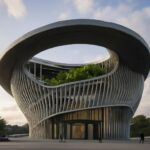
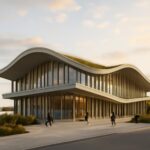
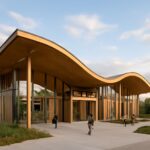
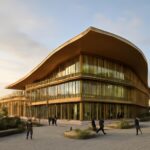
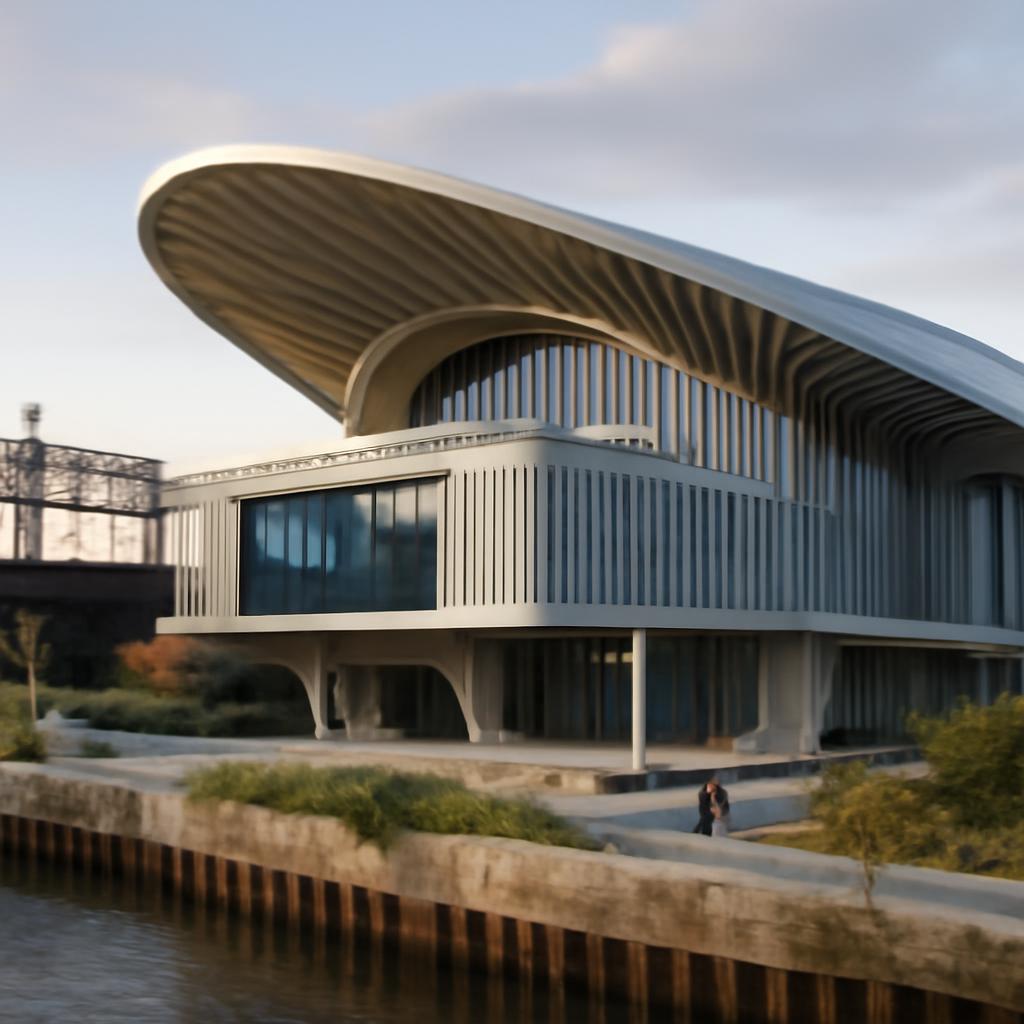
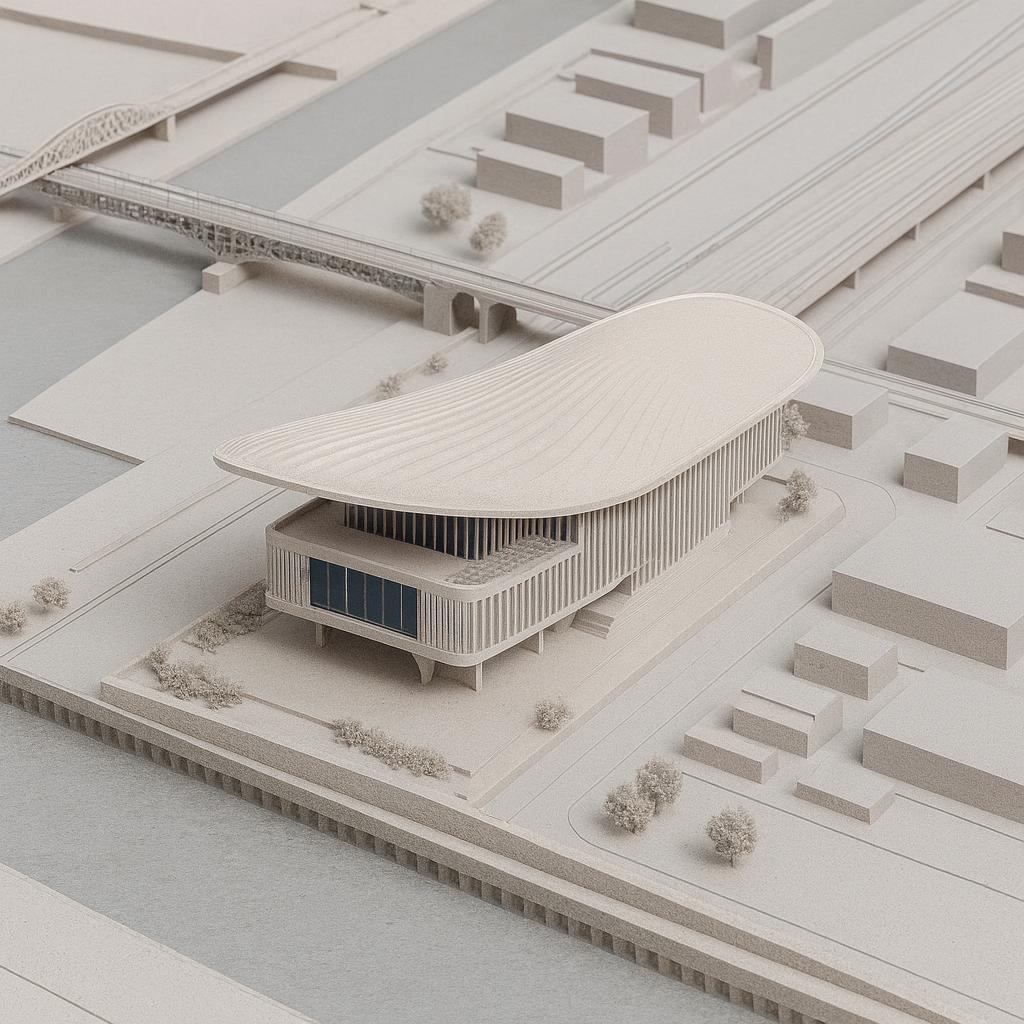
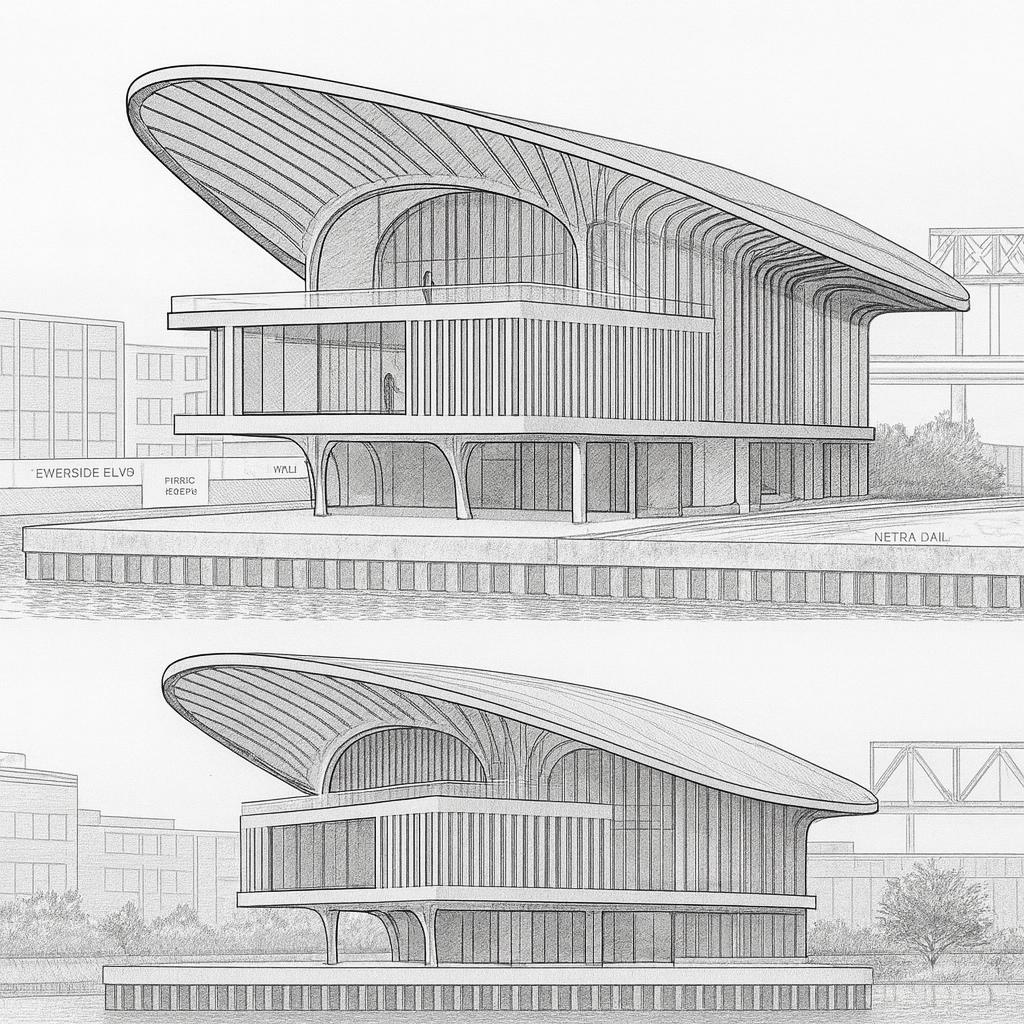
The Paris Civic Canopy Study is an audacious architectural concept situated on an undeveloped landmark-edge site in Paris, France. This mixed-use civic cultural center takes its inspiration from the Crater Courtyard Ecology Center massing, blending ecological sensitivity with urban functionality. The design, defined by its asymmetric flowing roofline and continuous ribbed facade bands, challenges conventional notions of civic architecture.
Site Context and Local Anchors
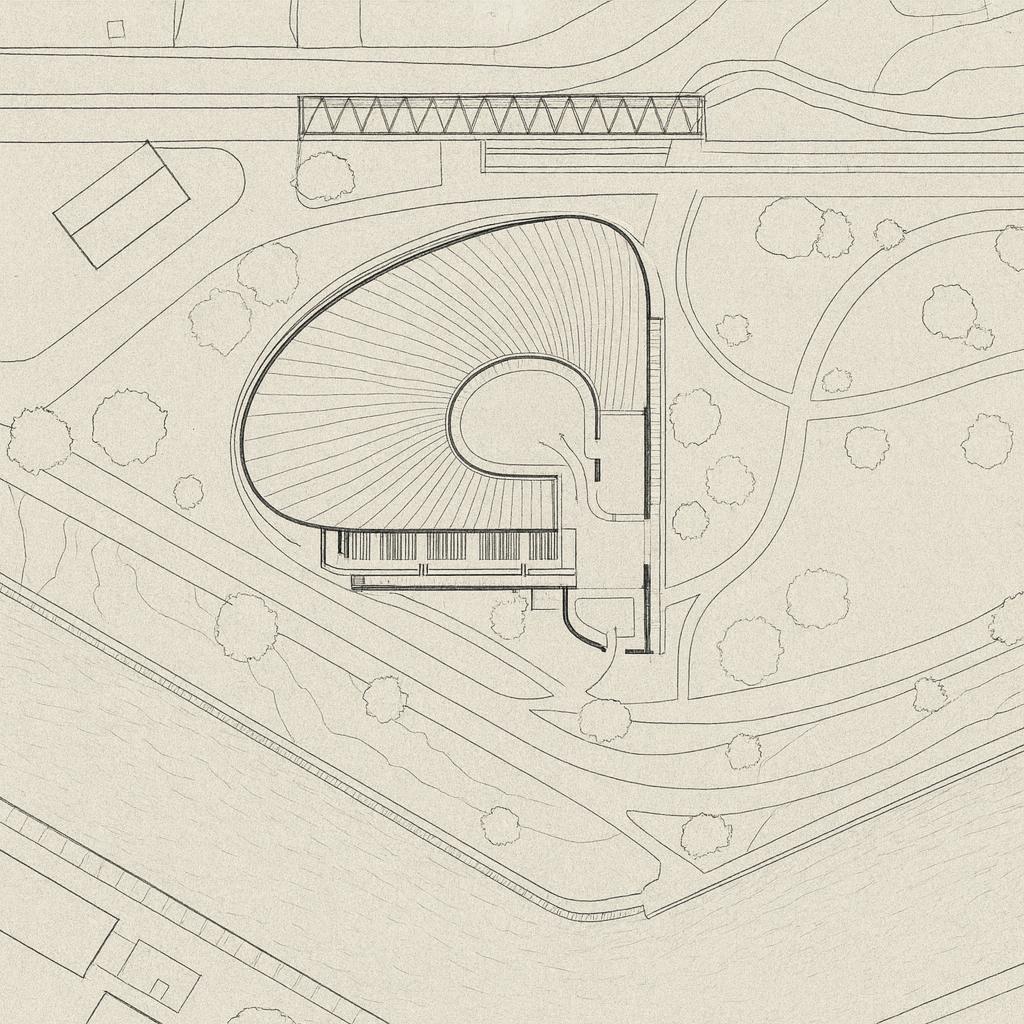
Designed to resonate with its Parisian locale, the structure is embedded with hyperlocal specificity. It draws from the essence of the surrounding urban fabric, integrating elements like the Seine's flood marks, the vestiges of railway viaducts, and the robust character of local industrial sheds. The juxtaposition of historical and modern elements enhances its place-specific narrative, anchoring the building within the local context while fostering public interaction at the urban edge.
Massing and Structural Expression
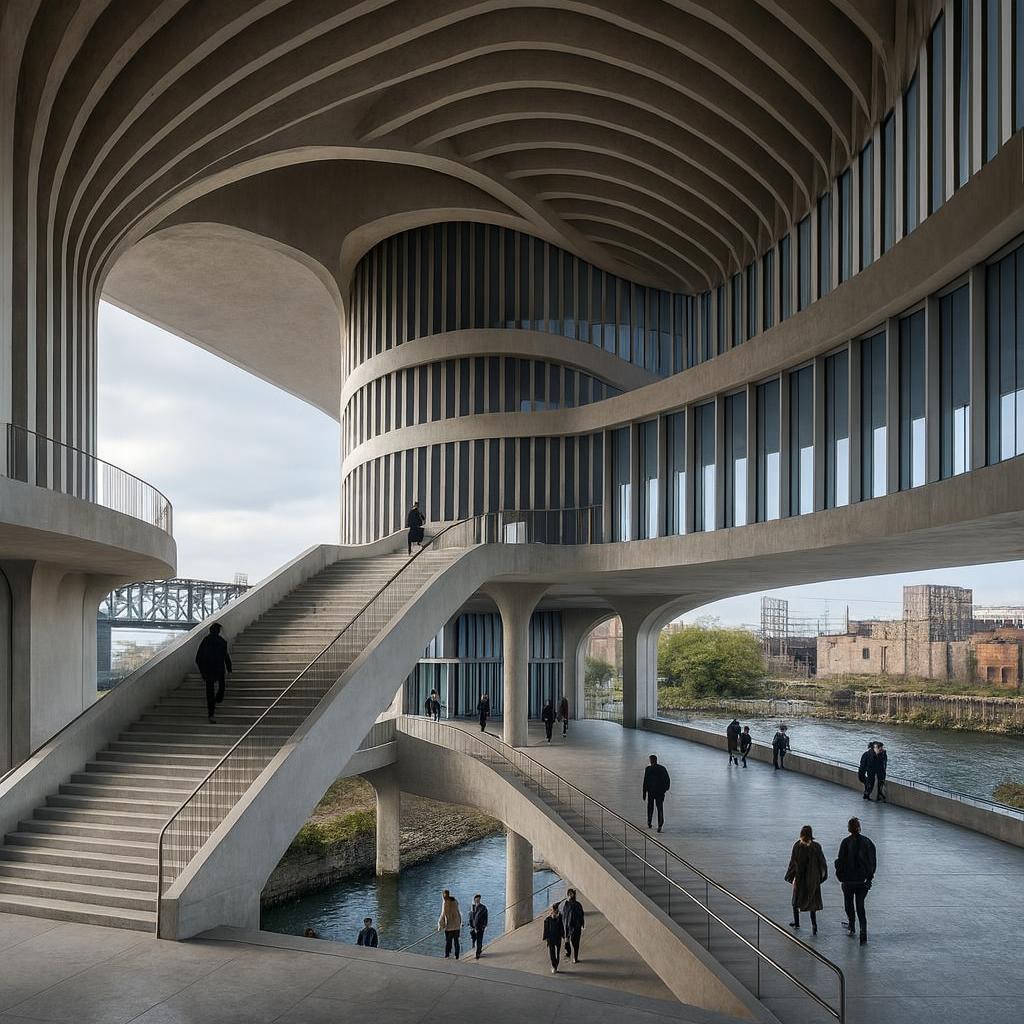
The structure capitalizes on a crater courtyard formation, offering legible floors and entries that resonate with human scale. The structural system is an interplay of pale concrete megastructure, graphite structural ribs, and silver membrane panels, creating a consistent architectural language both inside and out. It is complemented by the cobalt glass that allows natural light to penetrate deep within, enhancing interior spaces.
Facade and Sustainability
This architectural endeavor is not merely an aesthetic exercise; it integrates sustainability as a core principle. The facade's repeatable pattern of vertical ribs, curved glazing bays, and layered titanium shading fins ensures passive shading and daylighting. Moreover, the planted terraces along with low-carbon construction techniques embody its ecological stance.
| Material | Function | Sustainability |
|---|---|---|
| Pale Concrete | Primary Structure | Low-carbon Construction |
| Cobalt Glass | Facades and Windows | Daylighting |
| Silver Membrane Panels | Roof and Shading | Passive Shading |
Circulation and Interior Spaces
The interior is marked by an uncanny yet inviting spatial sequence, initiating with a compressed threshold leading into an expansive public room. The ribbed roof structure forms a skeletal overhead spine, guiding visitors through a series of ramps and bridges that connect various levels. The design encourages movement and interaction, fostering an unanticipated depth in user experience.
Social Tension and Provocative Program
Not just an architectural form, the project embodies a provocative social narrative. It stands at the intersection of public sanctuary and controlled access, beauty and discomfort, climate crisis and spectacle. The design facilitates dialogue, raising questions about the role of architecture in addressing climate risks and urban industrial reuse.
Conclusion
The Paris Civic Canopy Study invites us to reconsider the relationship between architecture and its environment. It challenges us to reflect on the integration of ecological systems with urban life through architecture.
Discussion
How does the integration of local industrial elements influence the perception and accessibility of this civic architecture within its urban context?